La mayoría de los clubes pierden familias por una sola razón. No es la calidad del entrenamiento, no es el estado de las canchas, ni siquiera el precio. Las pierden porque los padres dejan de sentirse informados, respetados y conectados con lo que pasa en la cancha. Si alguna vez te has preguntado cómo comunicarte con los padres de tus jugadores de una forma que de verdad los mantenga involucrados temporada tras temporada, la respuesta honesta es que hace falta un plan, no una personalidad.
Esta guía es el manual de operación que nos gustaría que todo director de club y entrenador principal tuviera desde su primer día. Reúne lo que dice la investigación sobre la retención, lo que exige SafeSport para el contacto entre adultos y atletas, lo que realmente implica la comunicación bilingüe en un mercado como el sur de Florida y qué hacer cuando un padre te confronta en el estacionamiento después de un partido difícil. Todo lo que aquí encontrarás está pensado para clubes que funcionan con horas de voluntariado y márgenes ajustados, donde un solo mensaje perdido puede costar una familia. Los clubes con familias de habla principalmente hispana pueden enviar cada mensaje en ambos idiomas sin mantener dos listas.
Repasaremos la base de la pretemporada, el ritmo durante la temporada, las decisiones sobre canales, las realidades del bilingüismo, el manual para padres difíciles y la coordinación interna que la mayoría de los clubes ignora hasta que se rompe. El objetivo es simple. Al terminar esta guía, deberías saber cómo comunicarte con los padres de una forma que genere confianza, proteja a tus entrenadores y haga que las familias se vuelvan a inscribir.
Puntos clave
- La comunicación es el factor número uno para que las familias vuelvan a inscribirse una segunda temporada.
- Las expectativas que se fijan antes de la temporada previenen la mayoría de los conflictos que aparecen una vez que empieza.
- En el sur de Florida y en la mayoría de los grandes mercados de Estados Unidos, la comunicación bilingüe es un requisito básico, no una función premium.
- Un canal estructurado del club es mejor que cinco chats grupales en claridad, responsabilidad y cumplimiento de las normas de protección infantil.
- Todo club necesita un plan para el padre difícil antes de encontrarse con uno, no después.
Por qué la comunicación decide la retención
La comunicación con los padres no es una habilidad blanda. Es la variable que predice si una familia regresa la próxima temporada, si tus entrenadores sobreviven a su tercer año y si tu reputación en la comunidad crece o se derrumba en silencio.
El estudio State of Youth Sports and Parent Expectations de PlayMetrics, realizado por Ascend2 con una muestra de 507 familias de clubes, encontró que el 28% de los padres se han perdido comunicaciones completas del personal del club. Eso es más de una de cada cuatro familias operando con información incompleta en cualquier momento. El mismo estudio mostró una diferencia marcada en la retención. El setenta y dos por ciento de los padres muy satisfechos se quedaron dos temporadas o más, mientras que solo el 58% de los padres menos satisfechos lo hicieron. La tasa de recomendación fue todavía más llamativa: 77% frente a 22%. El estudio fue encargado por un proveedor, así que lo tratamos como una asociación y no como una relación de causa y efecto, pero la señal coincide con lo que todo director de club ve en sus cifras de reinscripción.
El impacto posterior en los niños es igual de real. El Families in Sport Lab de Utah State, citado por Project Play, informa que el niño promedio abandona el deporte organizado a los 11 años. Las razones giran en torno a la diversión y el ambiente, no al talento. La investigación FUN MAPS de la Dra. Amanda Visek en George Washington University, publicada a través de la Himmelfarb Health Sciences Library, identificó 81 factores que determinan la diversión para los atletas jóvenes. Ganar quedó en el puesto 40. Los factores principales fueron tener espíritu deportivo, esforzarse y un entrenamiento positivo. La comunicación influye en cada uno de ellos.
También hay un hallazgo llamativo de Smoll y Smith, citado a través de Project Play, sobre lo que realmente logra la capacitación de entrenadores. Los jugadores dirigidos por entrenadores capacitados abandonan a una tasa de aproximadamente el 5%, mientras que los jugadores dirigidos por entrenadores sin capacitación abandonan a una tasa de aproximadamente el 26%. El factor más importante en la calidad de un entrenador, junto con el conocimiento de fútbol, es si sabe comunicarse con padres y jugadores de una forma que mantenga un ambiente positivo.
Hay un lado de esta historia, el de los entrenadores, que la mayoría de los clubes no ve hasta que es demasiado tarde. La encuesta National Coaches Survey 2025 del US Center for SafeSport, con una muestra de 3,470 entrenadores, encontró que el 85% se ha sentido agotado y el 64% ha considerado seriamente renunciar. El cuarenta y seis por ciento reportó acoso verbal mientras entrenaba. De quienes sufrieron acoso, aproximadamente el 56% identificó a los padres como la fuente más común. Una mala comunicación con los padres no solo te hace perder familias. También te hace perder a los entrenadores que pasaste años formando.
La conclusión para cualquier líder de club es incómoda pero útil. La comunicación es el insumo operativo clave. Es más barata que canchas nuevas, más rápida que un cambio de marca y más efectiva que cualquier campaña de marketing. Si quieres saber cómo comunicarte con los padres de una forma que mejore tus cifras de retención, empieza por tratarla como la prioridad estratégica que realmente es.
Antes de la temporada: la reunión de padres y la carta de expectativas
Lo que más impacto puede tener en tu club es hacer una verdadera reunión de padres antes de la temporada. No un correo. No un PDF. Una reunión, en persona o por videollamada programada, con las familias de cada equipo.
La Positive Coaching Alliance, en su guía Pre-Season Meeting Agenda en positivecoach.org, recomienda cubrir cuatro cosas siempre. La filosofía y los valores del entrenamiento. Las preferencias de comunicación, es decir, cuándo y cómo contactar al entrenador. La política de minutos de juego y de asistencia, explicada desde el principio. Y la definición de expectativas basada en escenarios, en la que el entrenador explica a los padres cómo se manejarán situaciones concretas antes de que ocurran.
La parte de los escenarios es la que la mayoría de los clubes se salta. Decirles a los padres "valoramos el desarrollo por encima de ganar" es un eslogan. Decirles "cuando tu hija se quede fuera el segundo cuarto de un partido empatado para que podamos rotar a una jugadora con menos experiencia en un momento de mucha presión, eso es desarrollo hecho a propósito" es un contrato. Lo primero se rompe bajo presión. Lo segundo se sostiene.
La reunión de pretemporada debe ir acompañada de una carta de expectativas por escrito que las familias firmen o acepten. Los Model Codes of Conduct de US Soccer, disponibles en ussoccer.com, sirven como punto de partida, pero la propia US Soccer señala que los códigos "deben ir acompañados de educación y comunicación constantes". Un código por sí solo no logra nada. La National Alliance for Youth Sports lo respalda con su Sports Parent Pledge, que combina un código con educación continua para los padres durante toda la temporada.
Qué cubrir realmente en la reunión
La agenda que recomendamos, adaptada de PCA y afinada con lo que hemos visto funcionar en clubes reales del sur de Florida, cabe en una sola página. Bienvenida y presentación del personal. La filosofía de entrenamiento del club en dos oraciones, no en dos páginas. La política de comunicación, incluido qué canal se usará, con qué frecuencia se enviarán mensajes y la regla de las 24 horas para conversaciones sobre partidos. La política de minutos de juego, explicada con tanta claridad que ningún padre salga con una interpretación distinta a la del siguiente. Las expectativas de comportamiento al costado de la cancha, también concretas. Los cuatro escenarios. Y, por último, una ronda de preguntas estructurada en la que cada familia pueda hacer al menos una pregunta.
Esta estructura funciona en la práctica. Una versión sólida es una reunión de padres de 45 minutos antes de cada temporada que cubra cuatro escenarios en una sola diapositiva: recoger tarde a los niños, faltar a partidos, minutos de juego y comportamiento al costado de la cancha. Los clubes que hacen este tipo de reunión de forma constante reportan menos quejas de padres en las temporadas siguientes, y las familias suelen describirla como lo que hizo que el club se sintiera profesional.
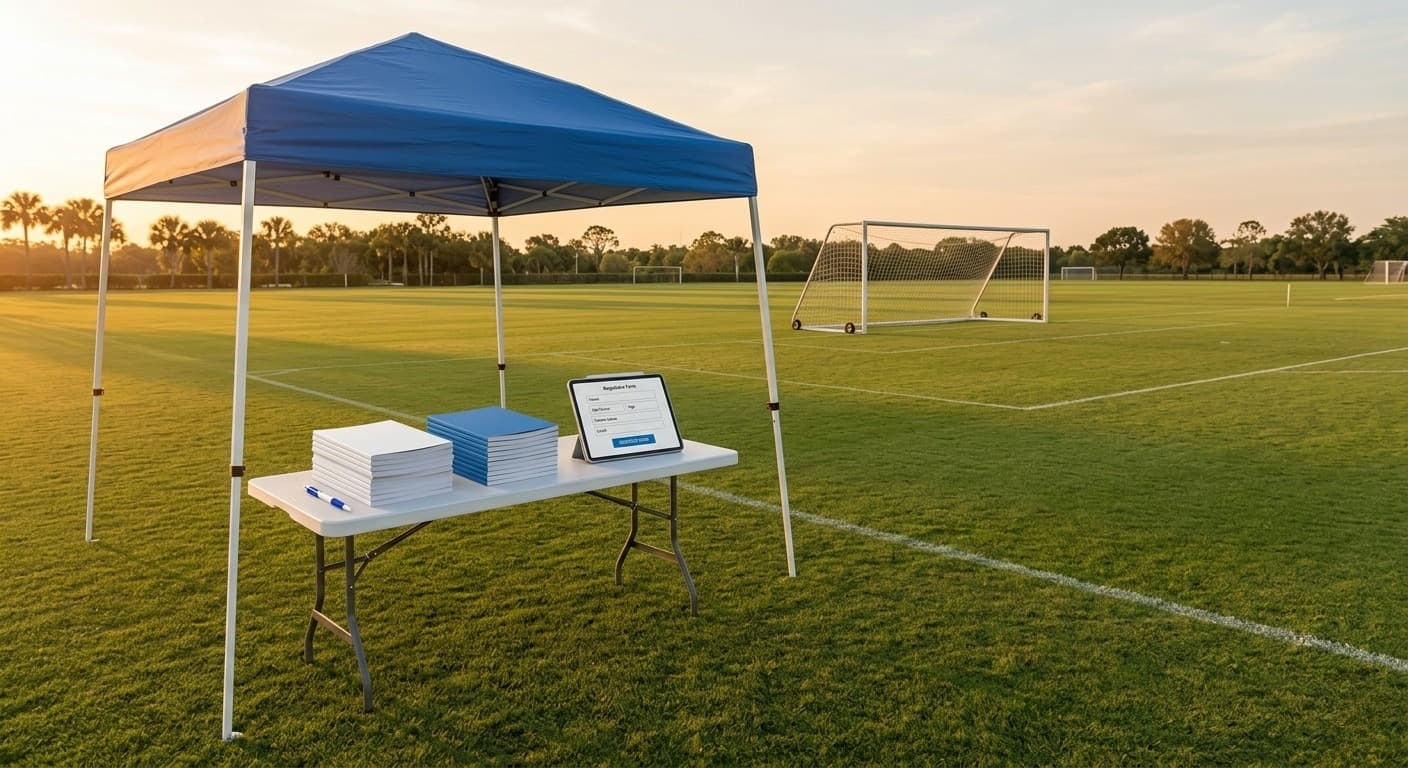
La misma idea se adapta a clubes más pequeños dirigidos por voluntarios. Si no puedes reunir a todas las familias en el mismo lugar, graba una versión en video de 20 minutos de la reunión, envíala a las familias en inglés y en español, y exige un formulario de confirmación antes del primer entrenamiento. Los clubes que pasan a anuncios estructurados con un paso de confirmación reportan de forma constante menos preguntas repetidas y menos conflictos a mitad de temporada. El formato importa menos que la disciplina de hacerlo.
Si quieres un punto de partida para los documentos en sí, nuestras plantillas de comunicación con padres en inglés y español incluyen la carta de bienvenida, el código de conducta, la política de minutos de juego y la página de firmas bilingüe. Adáptalas a tu club. No te saltes la reunión.
Ritmo y canales durante la temporada
La mayoría de los clubes se comunican de forma reactiva. Cambia una cancha, envían un mensaje. Se mueve un horario, envían un mensaje. Un padre se queja, envían un mensaje aclaratorio. Al final de la temporada, las familias han recibido cuarenta avisos sin conexión entre sí y no recuerdan ninguno.
TrueSport, en su guía de comunicación con padres en truesport.org, recomienda otro enfoque. Comunicarse en cuatro momentos clave: antes de la temporada, después de la selección de equipos, a mitad de temporada y al final. Inclinarse por comunicar de más, de forma proactiva. Cada uno de esos momentos tiene un propósito distinto y un mensaje distinto.
Antes de la temporada, el mensaje es logística y expectativas. Después de la selección, el mensaje es bienvenida, calendario y lo que viene. A mitad de temporada, el mensaje es el progreso, qué esperar en la segunda mitad y una consulta sobre cómo se sienten las familias. Al final, el mensaje es reconocimiento, resumen y la puerta de entrada a la próxima temporada. La mayoría de los clubes hacen los dos primeros y olvidan los dos últimos. Los dos últimos son donde realmente se decide la retención.
Un ritmo semanal práctico que funciona para la mayoría de los clubes se ve así. Un mensaje programado el lunes con el plan de la semana, incluidos horarios de entrenamiento, calendario de partidos, ubicación y cualquier nota sobre equipamiento. Un mensaje de recordatorio el día antes de cada partido con la logística. Un breve resumen o agradecimiento después del fin de semana, enfocado en el esfuerzo y los momentos del equipo, no en los marcadores. Mensajes de emergencia o por el clima cuando sea necesario, pero esos deben ser la excepción, no la norma.
Por qué falla el grupo único de WhatsApp
La configuración de comunicación por defecto en la mayoría de los clubes juveniles es el teléfono personal de un entrenador en un grupo de WhatsApp con los padres y, en algunos casos, con los jugadores. Funciona hasta que deja de funcionar.
El US Center for SafeSport, en uscenterforsafesport.org, exige que la comunicación electrónica entre adultos y atletas menores de edad sea "abierta y transparente". Nada de mensajes de texto privados uno a uno. Nada de mensajes directos privados. Un padre u otro adulto debe estar incluido en cualquier comunicación con un atleta menor de edad. En el momento en que un entrenador le responde a un jugador por un canal personal sin que un padre pueda verlo, el club deja de cumplir la norma, sin importar la intención.
Este es el argumento más fuerte a favor de una plataforma estructurada del club frente a las aplicaciones de chat para consumidores. Una plataforma con visibilidad para los padres incorporada resuelve el problema de SafeSport desde el diseño. Un grupo de WhatsApp no. Aquí no defendemos ninguna herramienta en particular, solo el principio. El canal de comunicación que elige tu club es una decisión de protección infantil, no solo de comodidad.
La segunda razón por la que falla el grupo único de WhatsApp es la relación entre señal y ruido. Cuando los cambios de horario, los recordatorios de pago, los avisos de inscripción y los debates sobre a quién le toca llevar la merienda viven en el mismo hilo, los mensajes importantes se pierden. El hallazgo de PlayMetrics de que el 28% de los padres se han perdido comunicaciones completas encaja directamente con esto. Técnicamente, la información está ahí. Nadie la vio.
Hay una tercera razón de la que casi no se habla. La rotación de entrenadores. Cuando un entrenador se retira o se va, todas las conversaciones que tuvo con las familias quedan en su teléfono personal, en su aplicación personal, muchas veces con su número de teléfono personal. El siguiente entrenador empieza de cero. El club no tiene registro de lo que se prometió, de lo que se habló ni de los compromisos asumidos. Un canal estructurado mantiene la memoria institucional dentro del club y no en el dispositivo de un exvoluntario.
Cuál debe ser el canal para las "conversaciones difíciles"
Para cualquier tema con carga emocional, sal del texto. SafeSport, PCA y TrueSport coinciden en esto. Los minutos de juego, el comportamiento, las lesiones y los temas disciplinarios corresponden a una llamada telefónica o a una conversación en persona, no a un hilo donde el tono se malinterpreta y no queda constancia de lo que realmente se acordó.
Una regla útil para los entrenadores: la logística de rutina en el canal del equipo, las novedades personales en un mensaje directo visible para los padres y las conversaciones difíciles en una llamada programada. Esa jerarquía protege al entrenador, a la familia y al club al mismo tiempo.
Comunicarse en dos idiomas, como se debe
En la mayoría de los grandes mercados de Estados Unidos, y sin duda en el sur de Florida, la comunicación bilingüe no es una función adicional. Es el mínimo.
La American Community Survey 2024 de la Oficina del Censo de Estados Unidos, reportada a través de USAFacts, muestra que 44.9 millones de personas de 5 años o más hablan español en casa en Estados Unidos, o aproximadamente uno de cada siete residentes. El condado de Miami-Dade es aproximadamente un 69% hispano, según QuickFacts de la Oficina del Censo de Estados Unidos para 2024. Broward y Palm Beach no se quedan muy atrás. Si un club de esta región envía mensajes solo en inglés, está dejando fuera de la conversación a una parte importante de sus familias.
La tentación es resolver el problema con traducción automática. Pasar el mensaje en inglés por Google Translate, copiar el resultado en español en el siguiente mensaje y seguir adelante. La investigación sugiere que esto es más riesgoso de lo que parece.
Khoong y sus colegas, en un estudio publicado en JAMA Internal Medicine en 2019 a través de UCSF, encontraron que Google Translate tradujo instrucciones médicas de alta hospitalaria con un 92% de precisión al español y un 81% al chino. De las traducciones incorrectas, el 2% de las del español y el 8% de las del chino podían causar un daño clínicamente significativo. Un estudio relacionado de Taira y sus colegas, publicado a través de PubMed Central, encontró que el significado se mantuvo en el 82.5% de las instrucciones en siete idiomas, pero documentó errores peligrosos en el resto. Se trataba de instrucciones de alta escritas por profesionales médicos, en entornos clínicos. Si la traducción automática distorsiona el significado en una proporción importante de casos en ese contexto, lo hará peor con el mensaje apurado de un entrenador sobre un cambio de cancha.
La implicación práctica para los clubes es clara. Los mensajes críticos, los relacionados con seguridad, dinero, inscripción o minutos de juego, deben ser escritos y revisados por una persona bilingüe de verdad, idealmente un miembro del personal o un voluntario del club. La logística de rutina puede apoyarse en la traducción automática si no tienes otra opción, pero solo si además tienes un canal de respaldo atendido por una persona real para las familias que lo necesiten.
El punto de fondo es cultural. Una familia hispanohablante no solo quiere el mensaje en español. Quiere un club que trate el español como un idioma de primera clase, no como algo secundario traducido por un software. Nuestra guía completa para dirigir un club de fútbol juvenil bilingüe explica el lado operativo de esto, desde el personal hasta los formularios y el sitio web. Para los clubes que hacen marketing dirigido específicamente a la comunidad hispana en Florida, nuestro manual bilingüe para campamentos de fútbol juvenil hispanos explica cómo llegar a las familias que hablan español en casa y quieren que su club haga lo mismo. Y para los cambios concretos que hacen que un club sea más acogedor para las familias latinas esta temporada, consulta nuestra guía sobre cómo dar la bienvenida a las familias hispanas en tu club de fútbol.
Para un club en Miami, Houston o Los Ángeles, esta no es una cuestión regional. Es la cuestión.
Cómo manejar al padre difícil
Todos los clubes los tienen. El padre que acorrala al entrenador después de una derrota. El que le escribe a la junta directiva a las 11 p.m. Aquel cuyo hijo, según él, siempre está en la banca injustamente. Saber cómo comunicarte con los padres incluye saber cómo comunicarte con los que están enojados, ansiosos o convencidos de que su hijo está siendo maltratado.
La herramienta para calmar los ánimos más citada es la regla de las 24 horas, respaldada tanto por PCA como por TrueSport. La regla es simple. Ninguna conversación sobre el partido con un entrenador durante las 24 horas posteriores al pitazo final. Padres, jugadores y entrenadores tienen un periodo para calmarse antes de hablar de cualquier cosa. La mayoría de los clubes la incluyen directamente en su código de conducta.
La razón por la que funciona tiene que ver con cómo el estrés afecta la comunicación. Justo después de un partido difícil, todas las partes están alteradas. Las palabras pegan más fuerte, el tono se interpreta de forma más agresiva y la conversación casi siempre escala. Veinticuatro horas de distancia no resuelven el problema de fondo, pero casi siempre convierten la conversación de un enfrentamiento en un diálogo.
Algunos otros principios, tomados de las guías de PCA y TrueSport:
- Ten la conversación en persona o en una llamada programada, no en un hilo. El texto elimina el tono y crea un registro permanente que a menudo hace que ambas partes se atrincheren.
- Escucha primero. Deja que el padre exponga su inquietud por completo antes de responder. La mayoría de los padres se calman de forma notable cuando se sienten escuchados.
- Céntrate en lo concreto. "Hoy tu hijo jugó 12 de 30 minutos, y esta es la razón" es más difícil de discutir que "a todos les damos minutos de forma justa".
- PCA rechaza explícitamente el "sándwich de críticas", la práctica de esconder un mensaje difícil entre dos elogios. Sé directo, sé respetuoso y sé concreto.
- Documenta la conversación después de tenerla, aunque sea con una nota de dos oraciones en un archivo compartido del club. Si el problema escala más adelante, la documentación importa.
También vale la pena ser honestos sobre la magnitud. La National Coaches Survey 2025 de SafeSport, con 3,470 participantes y reportada por ESPN, encontró que el 46% de los entrenadores han sufrido acoso verbal mientras entrenaban, y aproximadamente el 56% de ellos identificó a los padres como la fuente más común. Esto no es raro. Es la experiencia típica de una carrera como entrenador. Los clubes que tratan el manejo de padres difíciles como una habilidad operativa seria, con procedimientos documentados y vías de escalamiento claras, retienen a sus entrenadores por más tiempo.
Una vía de escalamiento real también importa. El entrenador se encarga de la primera conversación. Si no se resuelve, el director técnico o el director del club se suma a la segunda conversación. Si aun así no se resuelve, la junta directiva interviene con una respuesta formal por escrito. Cada paso se documenta. Cada paso tiene un plazo definido. Cada paso se le comunica a la familia con anticipación para que sepa qué esperar.
Nuestra guía dedicada sobre cómo manejar a padres difíciles en el deporte profundiza en guiones para calmar los ánimos, vías de escalamiento hasta la junta directiva y cuándo dar de baja a una familia. Por ahora, el principio operativo es este. Ten la política por escrito antes del primer incidente, capacita a cada entrenador en ella y nunca permitas que una conversación difícil ocurra en un estacionamiento.
Coordinación de voluntarios y entrenadores
La mayoría de las guías de comunicación se quedan en los padres. Eso deja fuera la mitad del sistema.
La comunicación que primero se rompe en la mayoría de los clubes es la interna. Un entrenador no sabe qué jugadores han pagado. Un tesorero no sabe qué familias todavía deben un saldo. El encargado de inscripciones descubre tres semanas después de empezada la temporada que un equipo tiene más jugadores de la cuenta. Un voluntario se anota para llevar la merienda y nunca recibe confirmación, así que no lleva nada, y un partido sub-9 termina con doce niños con sed y un padre frustrado.
El patrón es conocido. Los clubes funcionan con un mosaico de teléfonos personales, hojas de cálculo compartidas, hilos de correo electrónico y uno o dos voluntarios que casualmente lo saben todo. Cuando esos voluntarios se retiran, la memoria institucional se va con ellos.
La solución es operativa, no tecnológica. Los entrenadores necesitan un solo lugar donde ver su plantilla, su asistencia, el estado de los pagos y los mensajes del equipo. Los voluntarios necesitan una tarea clara, una petición clara y un agradecimiento claro. Los miembros de la junta directiva necesitan informes con un ritmo regular que no dependa de andar persiguiendo a la gente.
Algunas acciones que ayudan a cualquier club:
- Una reunión interna semanal, aunque sea una videollamada de 15 minutos, que reúna en la misma conversación a los entrenadores, al encargado de inscripciones y al tesorero.
- Un calendario compartido para todo el club, no solo para cada equipo, para que los voluntarios vean lo que viene y se organicen.
- Una incorporación documentada para los nuevos entrenadores que cubra los canales de comunicación, los requisitos de SafeSport y el manual de la reunión de padres. Nuestra guía de incorporación de entrenadores voluntarios lo explica a fondo.
- Un balance de fin de temporada con el cuerpo técnico en el que lo que funcionó y lo que falló quede por escrito, no solo conversado.
- Un informe mensual sencillo del encargado de inscripciones y del tesorero para la junta directiva, con el mismo formato cada mes, para que las tendencias sean visibles en lugar de quedar enterradas.
La comunicación interna no es glamorosa, pero es la diferencia entre un club que crece y un club que depende del calendario de una sola persona.
Cómo elegir tus herramientas de comunicación
A estas alturas de la guía, el panorama debería estar más claro. Tu club necesita un solo canal estructurado donde los mensajes para todo el club, los mensajes de los equipos y la visibilidad para los padres vivan en un mismo lugar. Ese canal tiene que permitir la comunicación bilingüe sin añadir un servicio de traducción aparte. Tiene que mantener a los entrenadores en cumplimiento con SafeSport haciendo que la visibilidad para los padres sea la opción por defecto. Y tiene que darle a la dirección del club una forma de ver qué se envió, cuándo y si se leyó.
Esta es la sección en la que encaja Centro.
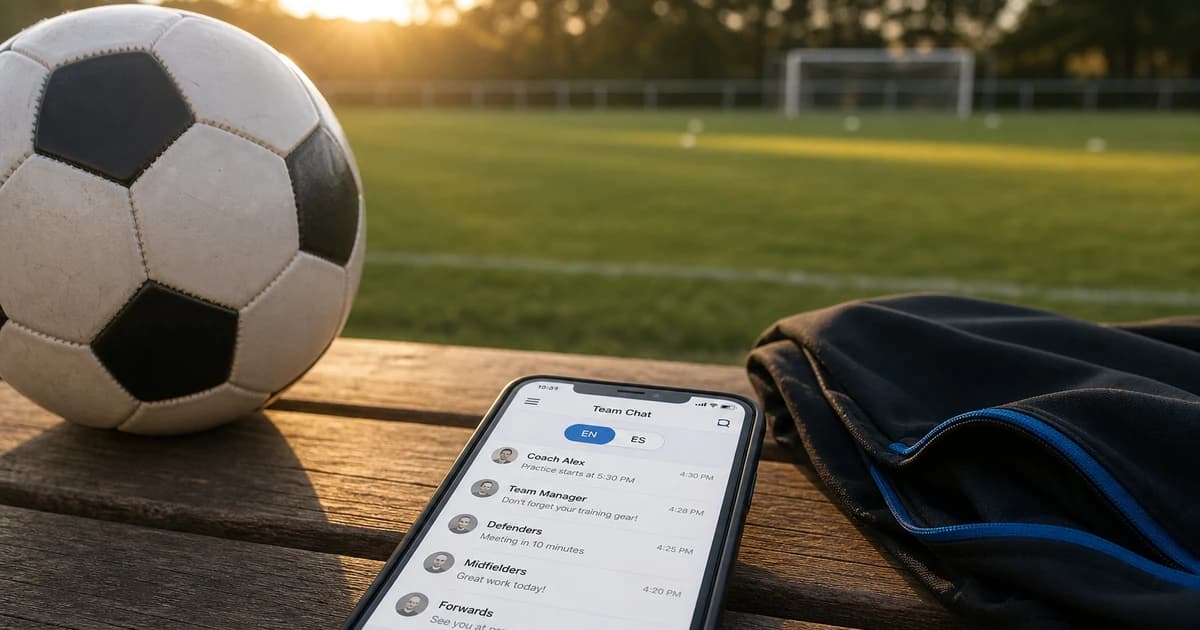
Centro es una plataforma todo en uno creada para clubes de fútbol juvenil, con Centro AI incluido para tu personal. Centro envía correos electrónicos a todo el club y a cada equipo en inglés o en español, con informes de aperturas y clics, además de chat de equipo en tiempo real. El mismo producto, sin complementos. Cada familia usa Centro en el idioma que elige, y cualquier mensaje del chat se puede traducir con un toque. Las conversaciones difíciles siguen teniendo lugar por teléfono, donde corresponde, pero el ritmo de rutina pasa por un solo canal estructurado en lugar de cinco chats grupales.
Centro cuesta $25 al mes para toda tu organización, más el 2% de los pagos en línea (las comisiones de procesamiento de Stripe son aparte). Sin cuotas por jugador. Prueba gratis de 14 días, sin tarjeta de crédito. Para los clubes que llevan años combinando una aplicación de chat para consumidores, una hoja de cálculo, una aplicación de pagos y tres herramientas de inscripción distintas, el atractivo es la consolidación. Un solo lugar para comunicarte. Dos idiomas. Informes de aperturas y clics en los correos que importan.
Cómo juntarlo todo
Saber cómo comunicarte con los padres es la habilidad operativa que, sin hacer ruido, decide si tu club crece o se achica. Los clubes que lo hacen bien no son los del mejor logo ni los del sitio web más llamativo. Son los que hacen la reunión de pretemporada, siguen un ritmo de cuatro momentos clave, tratan la comunicación bilingüe como el mínimo, tienen un plan por escrito para los padres difíciles y eligen un solo canal estructurado en lugar de cinco chats grupales.
Nada de esto es glamoroso. Todo se puede aprender. Y cada pieza se suma a las demás. Un club que hace bien la comunicación retiene a las familias por más tiempo, retiene a los entrenadores por más tiempo y construye el tipo de reputación en la comunidad que atrae a nuevas familias sin gastar un dólar en marketing.
La Copa Mundial de la FIFA 2026 va a traer una ola de nuevas familias al fútbol juvenil en todo el país y especialmente en el sur de Florida, donde Miami será sede de siete partidos a partir del 11 de junio. Los clubes que tengan sus sistemas de comunicación listos antes de que llegue esa ola la aprovecharán. Los que no, verán cómo las familias los prueban, se frustran y se van.
El trabajo es sencillo. Haz la reunión. Define el ritmo. Traduce los mensajes con una persona bilingüe de verdad que los revise. Capacita a cada entrenador en la regla de las 24 horas. Elige un canal y quédate en él. Documenta lo que haces. Y vuelve a hacerlo la próxima temporada. Así es como la comunicación se convierte en un sistema, no en una carrera contra el reloj.
Centro envía mensajes a todo el club y a cada equipo en inglés y en español, con seguimiento de lectura, para que nada se pierda en un chat grupal. Mira lo que ven las familias en Centro.