Managing Difficult Sports Parents: A Coach's Survival Guide
Managing difficult sports parents is the coaching challenge no clinic prepares you for. This guide gives you a practical system for prevention, in-the-moment de-escalation, documentation, and protecting your coaches from burnout.

On this page
Managing difficult sports parents is the part of coaching that no licensing course prepares you for. You can plan a brilliant training session, develop players all season, and still have your weekend defined by one parent who corners you after the final whistle. The conflict is real, it is common, and most of it is preventable. This guide gives you a practical system for handling parent conflict before, during, and after it happens, so it costs you less time and fewer good coaches.
Key Takeaways
- Most parent conflict is preventable when expectations are set early and in writing.
- Never try to solve a problem in the heat of a sideline moment.
- Document patterns of behavior so a one-off complaint and a repeat issue are treated differently.
- Have an escalation path to club leadership before you need it.
- A code of conduct is your backup and your boundary, not a threat you wave at families.
The Parent Conflicts Every Coach Eventually Meets
Every coach who stays in the game long enough meets the same handful of situations. The playing-time complaint. The parent who coaches from the sideline louder than you do. The criticism of your lineup, your formation, your substitutions. And the ugliest one, abuse aimed at a referee who is often a teenager.
This is not rare, and the data says so. The National Association of Sports Officials surveyed 35,813 officials in 2023 and found that 68.81% believe sportsmanship is getting worse. More than half said they have feared for their safety, and nearly 12% reported being physically assaulted during or after an event. An earlier NASO survey identified parents as the single largest source of problems, ahead of coaches and players.
The sideline is no calmer. A Liberty Mutual youth sports survey found that 60% of parents and coaches had witnessed or taken part in negative or abusive sideline behavior. If you have coached a season, you have seen it.
The referee corner deserves its own warning. Many youth officials are teenagers working their first job, and abuse aimed at them is the fastest way a club loses the people it cannot run games without. NASO reports that officials are leaving the field faster than clubs can replace them, and unchecked sideline behavior is a direct driver. When you protect the referee, you are protecting your own season, because a club with no officials has no games to coach.
Positive Coaching Alliance ties some of this to money. As families pour more into club and travel soccer, a sense of entitlement to outcomes follows the investment. The parent paying for a competitive roster spot can start to treat playing time as a purchase rather than a developmental decision. Understanding that root cause does not excuse the behavior, but it helps you respond to it without taking it personally.
Picture a volunteer U-12 coach in a Miami-Dade club. Two games into the season, a father starts filming every substitution and emailing the club director a running tally of minutes. The coach feels attacked. What the situation actually needs is not a defense of every decision, but a system that was supposed to be in place before the season started.
Prevention Beats De-escalation
The best conflict management happens weeks before the conflict. The single highest-return hour you spend all season is the pre-season parent meeting.
Positive Coaching Alliance recommends using that meeting to share your coaching philosophy, state how and when parents should contact you, and set the playing-time and attendance policy out loud. Scenario-based questions help. Ask the room, "What should happen if a parent disagrees with a referee's call?" and answer it before it ever occurs.
Back the meeting with a written expectations letter and a code of conduct. US Soccer publishes Model Codes of Conduct and makes one point clearly: a code only works when it is "paired with consistent education and communication." A code of conduct sitting unread in a registration packet changes no behavior. A code you walk through, that parents sign, and that you reference consistently becomes a real boundary.
This is where structured documentation matters. When every family has acknowledged the same code of conduct at registration, you are no longer arguing about whether a behavior is acceptable. You are pointing to an agreement the family already made. Our soccer parent communication guide covers the full pre-season foundation, and our parent communication templates give you the expectations letter and code-of-conduct language to adapt.
A club in Broward County learned this the slow way. After a season of sideline blowups, the director added a 20-minute parent meeting and a signed code to every team's first week. The next season, the conflicts did not vanish, but when they happened, the coach had something to point to that was not just personal opinion.
In the Moment: De-escalation
Some conflict will reach you anyway, usually right after a hard game when emotions are highest. The first rule is the one most coaches break: do not solve it now.
The most widely endorsed tool in youth sports is the 24-hour rule, recommended by both Positive Coaching Alliance and TrueSport. No game-related concern gets discussed until 24 hours have passed. Tell parents about the rule at the pre-season meeting so that when you invoke it, you are following a shared policy, not dodging a hard conversation.
In the moment itself, your job is to lower the temperature, not win the argument. Stay calm. Do not match volume. Acknowledge the emotion without conceding the point: "I can see you are frustrated. This matters to me too. Let's set a time tomorrow to talk it through properly." Then end the interaction.
Managing difficult sports parents in the moment is a skill you can practice. Consider how it played out for a coach in a Palm Beach club whose parent stormed the bench at halftime over a substitution. Instead of arguing, the coach said one sentence: "I hear you. Let's talk tomorrow at five." The parent kept pushing. The coach repeated the same sentence, calmly, and walked to the far end of the bench. The next day the conversation lasted ten minutes and ended fine, because it happened away from the scoreboard and the crowd.
A few things to avoid. Do not debate playing time in front of the player or other families. Do not get defensive about every decision, which only extends the confrontation. And when you do give feedback later, skip the praise-criticism-praise pattern. Positive Coaching Alliance rejects the so-called criticism sandwich as ineffective and recommends direct, specific communication delivered honestly instead.
After the Moment: Document and Escalate
A single frustrated email is not a pattern. A parent who sends one every week is. You cannot tell the difference without a record.
Keep communication on the record and in one place. When a difficult exchange happens in a personal text thread or a hallway conversation, it leaves no trace, and a he-said-she-said dispute later has no evidence. When it happens through the club's documented channels, you have dates, context, and a history.
Know your escalation path before you need it. There should be a clear point at which a coach hands a persistent conflict to club leadership or an administrator for mediation. That is not failure on the coach's part. It is the structure working as designed, and it protects a volunteer from carrying a fight that belongs at the club level.
Documentation also changes how an escalation lands. When a coach brings a director a vague complaint that a parent is difficult, there is little to act on. When the coach brings three dated messages that show a pattern, the director can act with confidence, and the parent can see that the concern is about behavior over time, not a clash of personalities. A record turns a feeling into a fact.
US Soccer gives clubs real backing here. The Respect The Call initiative and the Referee Abuse Prevention Policy, effective in March 2025, set out a penalty structure for abuse aimed at officials. When a sideline incident crosses into abuse, your club is not improvising. There is a defined process to follow.
Protecting Your Coaches
Difficult parents are not just a coaching inconvenience. They are a retention problem for your staff, and the data is stark.
The US Center for SafeSport's 2025 National Coaches Survey of 3,470 coaches found that 85% have felt burned out and 64% have seriously considered quitting. Forty-six percent reported being verbally harassed while coaching, and of those, roughly 56% identified parents as the most common source, ahead of athletes and officials. Managing parents ranked among the top reasons coaches considered walking away.
The fix is not to ask coaches to absorb more. It is to take the weight off them. That means club leadership that steps in on repeat offenders, a clear policy the coach did not have to invent, and communication tools that keep a difficult exchange from living only in one volunteer's memory. Coaches stay where they feel backed, and they leave where they feel alone with the problem.
Read that again as a club director. You spend years developing a coach's skill and relationships, and a handful of unmanaged parents can end that investment in a single season. Treating difficult-parent management as a serious operational skill, with documented procedures and clear escalation, is how you keep the coaches you have. Our volunteer coach onboarding guide covers how to set new coaches up with that support from day one, and Centro's coaches tools give them the structure to handle communication without carrying it alone.
The System Behind Calm Communication
Calm communication is not a personality trait. It is a system. When your club runs every message through one structured channel with parent visibility built in, the flashpoints get smaller. Important messages do not get lost in a noisy group chat. Hard conversations stay documented. And a code of conduct that everyone signed is one tap away when you need it.
Centro keeps club communication on the record and in one place, with documents like your code of conduct and acknowledgements stored against each family. So the hard conversations stay documented and calm, and your coaches are never left to handle a difficult parent on memory and a personal phone. See what families see in Centro.
Keep reading
More on running a better club.
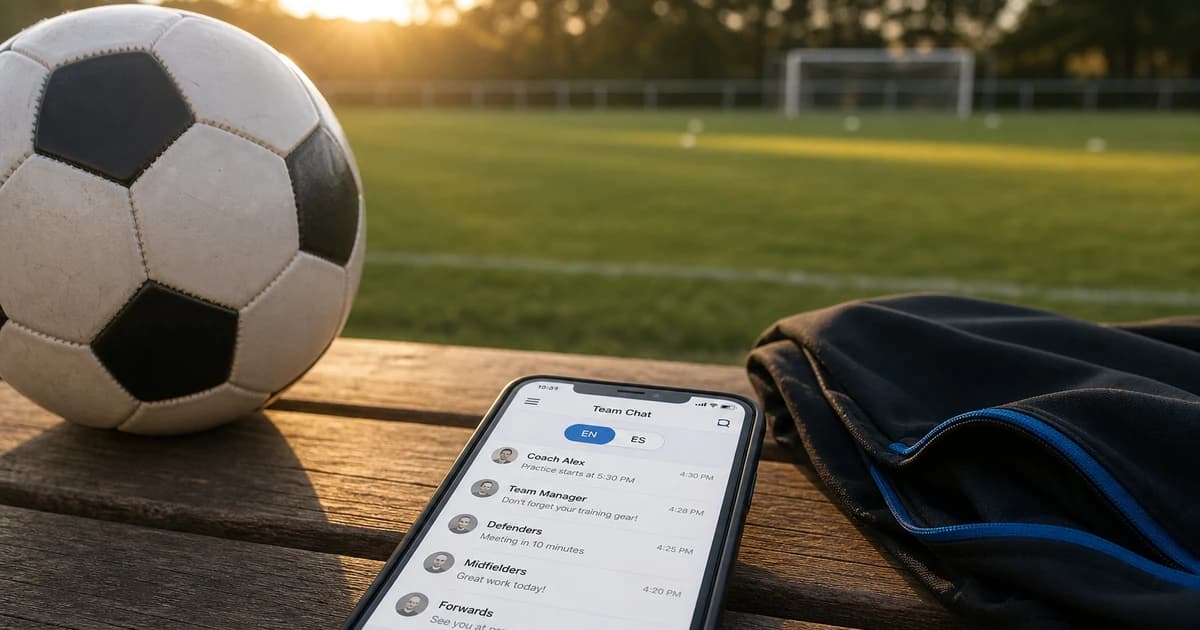
How to Communicate With Sports Parents: The Complete Guide for Soccer Clubs
Most clubs lose families because of communication, not coaching. This guide covers how to communicate with sports parents through pre-season meetings, in-season cadence, bilingual delivery, and a real playbook for difficult parents. Built for youth soccer clubs that want families to renew.

Marketing a Florida Hispanic Youth Soccer Summer Camp: A Bilingual Playbook
Filling a Hispanic youth soccer summer camp in South Florida is not the same job as filling a generic soccer camp. We cover the Spanish-first channels that work, the May-to-June close timing that captures the decision window, and the bilingual landing page that converts.

How to Run a Bilingual Youth Soccer Club: The Complete Guide
More than 44 million people speak Spanish at home in the U.S., and Hispanic youth are the fastest-growing segment in youth sports. This guide covers the three layers of bilingual club operations, from registration to communication to coaching content, and the technology that makes it scalable without doubling your workload.