How to Run a Bilingual Youth Soccer Club: The Complete Guide
More than 44 million people speak Spanish at home in the U.S., and Hispanic youth are the fastest-growing segment in youth sports. This guide covers the three layers of bilingual club operations, from registration to communication to coaching content, and the technology that makes it scalable without doubling your workload.
On this page
More than 44 million people in the United States speak Spanish at home (U.S. Census Bureau, 2024 American Community Survey). Hispanic youth are the fastest-growing segment in youth sports, and soccer is the sport they gravitate toward most. If your club is not set up for bilingual youth sports, you are leaving families, players, and revenue on the table.
This guide breaks down what it takes to run a truly bilingual soccer club. We cover the demographics, the three layers of bilingual operations, and the technology that makes it possible without doubling your workload.
Key Takeaways
44.9 million people speak Spanish at home in the U.S., and Hispanic youth tried sports at a higher rate than any other demographic in 2024 (Aspen Institute, State of Play 2025).
Bilingual communication is not a feature. It is a growth strategy. Clubs that communicate in both languages retain more families and attract new ones.
Running a bilingual club means translating three things: registration, communication, and coaching content.
You do not need bilingual staff for every role. You need bilingual systems that handle translation automatically.
The clubs that figure this out before the 2026 World Cup will capture the registration surge from the largest Hispanic sports audience in U.S. history.
The Numbers Behind Bilingual Youth Sports
The Hispanic population in the United States reached 68.1 million in 2024, crossing the 20% threshold for the first time (Pew Research Center, October 2025). That is not a niche. That is one in five Americans.
Of those 68 million, 44.9 million speak Spanish at home (U.S. Census Bureau, 2024 ACS). Spanish speakers in the U.S. grew 21.3% between 2010 and 2024, nearly double the growth rate of the overall population. In Miami-Dade County alone, approximately 69% of the population identifies as Hispanic or Latino (U.S. Census Bureau, 2020 Decennial Census).
These families are already showing up to the field. According to SFIA data analyzed by the Aspen Institute's State of Play 2025 report, 65% of Latino youth ages 6 to 17 tried a sport at least once in 2024. That is the highest participation rate of any demographic group. Latino youth sports participation grew at a 3.9% compound annual growth rate from 2019 to 2024, nearly double the rate of non-Latino peers (McKinsey Institute for Economic Mobility, October 2025).
Latina girls saw some of the strongest gains, with participation climbing from 39.5% in 2019 to 48.4% in 2024 (McKinsey, citing SFIA). And in a survey of 1,000+ children in Colorado, 42% of Latino kids said soccer was the sport they play most (Aspen Institute, State of Play Colorado, June 2024).
But here is the gap that should concern every club director: Latino and Black children are three times more likely than White children to quit soccer because they feel unwelcome (McKinsey/U.S. Soccer Federation, October 2025). Language barriers are a leading cause. The Aspen Institute specifically lists non-Spanish-speaking administrators as one of the key obstacles keeping Hispanic families from staying in organized youth soccer.
The opportunity is enormous. The audience is already passionate about the sport. The question is whether your club is set up to welcome them. For a deeper look at the full national picture, we break down the latest us youth soccer statistics in a separate post.
What "Bilingual" Actually Means for a Soccer Club
Translating your website into Spanish is not the same as running a bilingual club. A bilingual soccer club operates in both languages across three distinct layers.
Layer 1: Registration and Onboarding
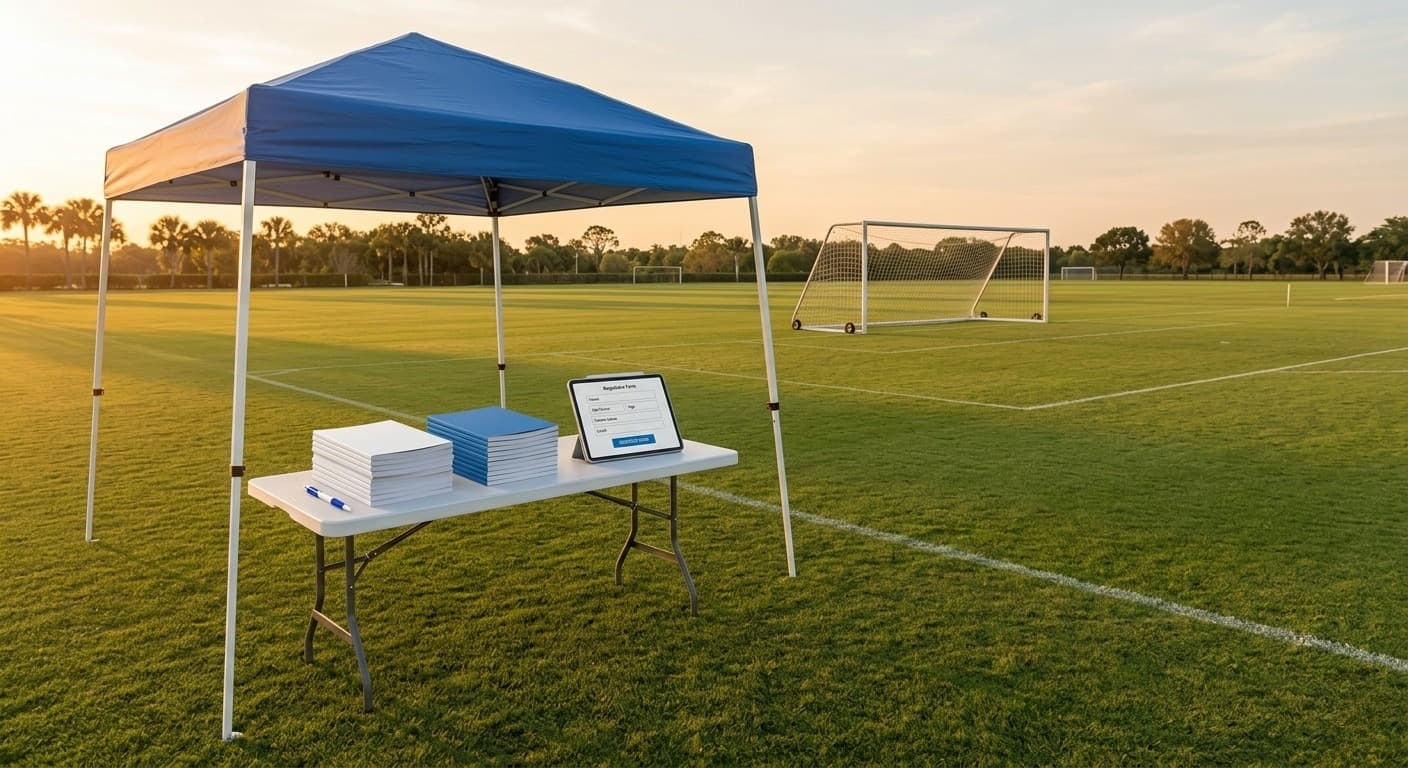
This is the first touchpoint. Registration forms, liability waivers, welcome packets, and parent handbooks all need to exist in both English and Spanish. If a family visits your registration page and everything is in English, they may fill it out anyway. But they may also bounce, forward the link to someone who can translate, or give up entirely.
Layer 2: Ongoing Communication
This is where most clubs fail. Even clubs that offer bilingual registration often send announcements, schedule changes, payment reminders, and weather cancellations in English only. That creates an information gap that compounds over a season.
Layer 3: Coaching Content
Practice plans, session notes, and player feedback should be accessible in both languages. Parents want to understand what their child is working on. When those materials are only in English, Spanish-speaking parents feel disconnected from the coaching process.
Here is a scenario that plays out every season. A club in Hialeah has 60% Spanish-speaking families. They send all announcements in English only. Three families miss a schedule change because they did not fully understand the message. Two of those families do not re-register the next season. The club just lost six players and their registration fees because of one language barrier.
That is not a communication problem. That is a retention problem. And it is preventable. If you are building a new program from scratch, our guide on how to start a youth soccer club covers the full process, and building bilingual from day one is far easier than retrofitting later.
How to Make Your Registration Bilingual
Registration is the front door of your club. If it only opens in one language, you are shutting out a significant portion of your market.
Your registration forms need to be available in both English and Spanish, and we do not mean a Google Form with a note at the top that says "traduccion disponible." We mean actual forms built in Spanish, with field labels, instructions, and confirmation messages all in the family's preferred language.
What Bilingual Registration Includes
Waivers and consent forms must be available in both languages. This is both a practical and legal consideration. A parent signing a waiver they cannot fully read is a liability risk for your club.
Welcome packets and parent handbooks should exist in both languages. Auto-confirmation emails should go out in the family's preferred language, not the club's default.
Here is what good bilingual registration looks like. A family visits your club website. They see the registration page in Spanish. They fill it out in Spanish. They receive a confirmation email in Spanish. They feel welcomed before they ever meet a coach. That first impression sets the tone for the entire relationship.
For templates and examples, our parent communication templates resource covers bilingual messaging for every stage of the parent experience.
Bilingual Communication That Scales
The biggest mistake clubs make is relying on one bilingual staff member to translate every text, email, and announcement. That person becomes a bottleneck. They burn out. And when they leave, your entire bilingual operation collapses overnight.
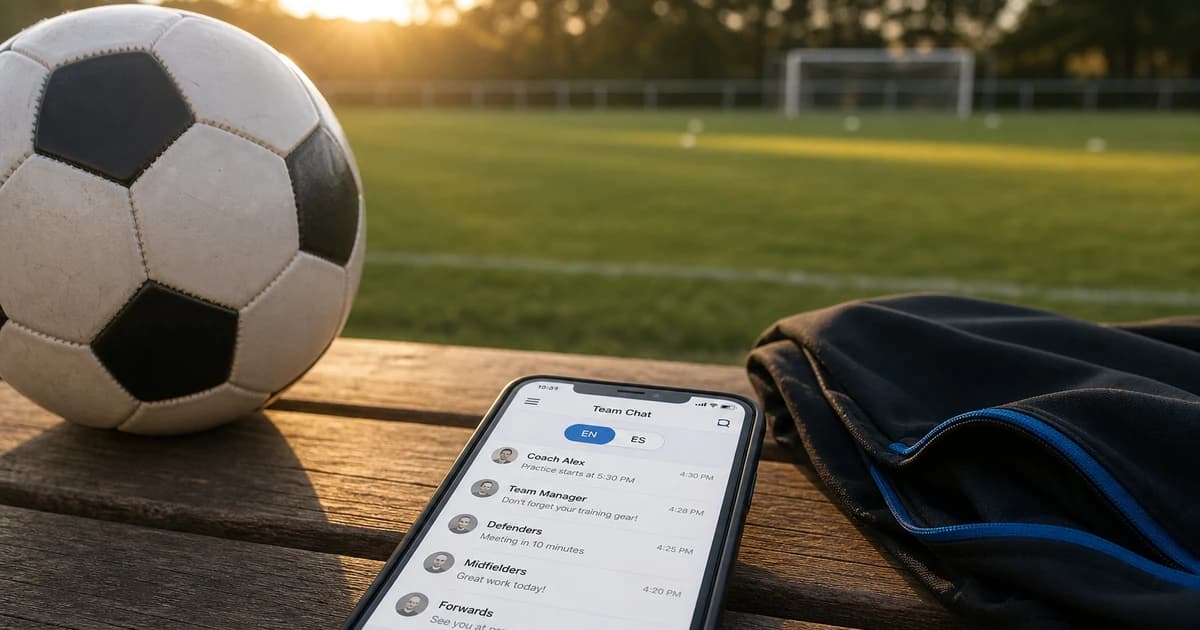
The solution is systems that send messages in both languages simultaneously. Write one announcement, and the system delivers it in English and Spanish to every family. Payment reminders, schedule updates, weather cancellations, tournament information: all of it goes out in both languages, automatically.
This matters more than most directors realize. Research from the Kantar U.S. Monitor Report (2021) found that 88% of U.S. Hispanics appreciate businesses that engage with them in Spanish. Nielsen's research shows that bilingual consumers report 30% higher recall rates for messaging delivered in Spanish versus English (Nielsen IAG, 2009). When families receive communication in their preferred language, they pay closer attention, respond faster, and stay connected to the club.
Why Google Translate Is Not the Answer
Auto-translation tools produce awkward, sometimes embarrassing results. Spanish-speaking families can spot machine-translated content immediately. It signals that the club does not actually care enough to communicate properly. Native bilingual content, written by Spanish speakers using the Latin American register that most U.S. Hispanic families speak, reads naturally and builds trust.
The difference between "Se ha cancelado su practica debido a condiciones meteorologicas adversas" (machine) and "Se cancelo la practica de hoy por lluvia" (native) is the difference between feeling like a customer and feeling like part of a community.
Free resourceParent communication templatesEight templates, English and SpanishBilingual Coaching Content
Parents want to know what their child is learning. When practice plans, session notes, and player feedback are only available in English, Spanish-speaking parents are left out of the coaching conversation.
You do not need every coach to speak Spanish fluently. What you need is for supporting materials to be accessible in both languages. Practice plans with drill descriptions, session objectives, and coaching points should be available in English and Spanish so that any parent can follow along.
Coaching Terminology Matters
Soccer terminology differs between English and Spanish in ways that go beyond direct translation. A "through ball" is a "pase filtrado." A "set piece" is a "jugada a balon parado." When your coaching materials use proper Spanish soccer vocabulary (not literal translations), it signals cultural fluency to families who grew up with the sport.
This connects to a broader point about respect. The Aspen Institute's research on Latino youth in soccer identifies cultural barriers and lack of Latino coaches as specific reasons families disengage. When your club makes the effort to produce coaching content in both languages, using correct soccer terminology, you are telling Spanish-speaking families that they belong here.
For clubs in the South Florida region, where the majority of families are bilingual or Spanish-dominant, this is not optional. It is table stakes.
Technology That Makes Bilingual Operations Possible
Manual translation does not scale. Once your club passes 20 to 30 families, the volume of messages, invoices, registration forms, and notifications makes it impossible for one person to translate everything. You need a platform that handles bilingual communication automatically.
What to Look For in a Bilingual Youth Sports Platform
Not all "multilingual" claims are equal. Here is what actually matters.
Native bilingual content. The Spanish should be written by Spanish speakers, not run through a translation engine. It should use informal "tu" (Latin American register), not formal "usted" or peninsular Spanish.
Auto-bilingual messaging. Write one announcement, and the platform sends it in both English and Spanish. No copy-pasting into a translator. No asking a parent volunteer to proofread.
Bilingual registration forms. Every field, every instruction, every confirmation message available in both languages.
Bilingual waivers and documents. Parents sign forms in the language they understand best.
Centro was built bilingual from the first line of code. Every screen, email, invoice, notification, and receipt works natively in English and Spanish. We did not build an English platform and then translate it. Both languages are the default. The Latin American Spanish register reads naturally to Hispanic families across the U.S., not like a textbook or a government form.
No other youth sports management platform offers native bilingual support. TeamSnap, SportsEngine, LeagueApps, and PlayMetrics all operate in English only. That means clubs using those platforms must handle all Spanish communication manually, outside the system. For a full breakdown of how platforms compare, our Miami club directory maps every registered club in the area and the tools they rely on.
The 2026 World Cup Is the Deadline
The 2026 FIFA World Cup kicks off in June, and Miami is hosting seven matches at Hard Rock Stadium (FIFA, 2026 schedule). According to McKinsey's Sports Fan Survey (June 2025), 44% of U.S. Latinos plan to follow the tournament, the highest engagement rate of any demographic group.
After the 1994 World Cup, the last time the U.S. hosted the event, US Youth Soccer registration grew from more than 1 million players in the early 1990s to more than 3 million by 2006 (US Youth Soccer). The 2026 edition was bigger, and the Hispanic audience drove much of the growth. MRI-Simmons (February 2026) reported ahead of the tournament that 22% of planned World Cup viewers would be Hispanic, making them 23% more likely than the average U.S. adult to tune in.
Clubs that are already set up for bilingual youth sports will be ready to absorb the registration surge. Clubs that are not will watch those families sign up somewhere else, or worse, not sign up at all because they could not find a club that felt welcoming.
The window is open right now, before the World Cup puts youth soccer in front of every family in America.
Start Building Your Bilingual Club Today
Running a bilingual youth soccer club does not require hiring a full bilingual staff or doubling your administrative workload. It requires choosing the right systems, building bilingual into your registration and communication from the start, and treating Spanish-speaking families as the core audience they are, not an afterthought.
The data is clear. The demand is real. And the timeline is short.
Centro is built bilingual from day one rather than translated afterwards. Every message, invoice, and notification goes out in English and Spanish, automatically. $25/mo, everything included. See how the bilingual side works
Keep reading
More on running a better club.

Marketing a Florida Hispanic Youth Soccer Summer Camp: A Bilingual Playbook
Filling a Hispanic youth soccer summer camp in South Florida is not the same job as filling a generic soccer camp. We cover the Spanish-first channels that work, the May-to-June close timing that captures the decision window, and the bilingual landing page that converts.

Managing Difficult Sports Parents: A Coach's Survival Guide
Managing difficult sports parents is the coaching challenge no clinic prepares you for. This guide gives you a practical system for prevention, in-the-moment de-escalation, documentation, and protecting your coaches from burnout.
How to Communicate With Sports Parents: The Complete Guide for Soccer Clubs
Most clubs lose families because of communication, not coaching. This guide covers how to communicate with sports parents through pre-season meetings, in-season cadence, bilingual delivery, and a real playbook for difficult parents. Built for youth soccer clubs that want families to renew.