US Youth Soccer Participation Statistics 2026: What Club Leaders Need to Know
Total US soccer participation hit 20.5 million in 2024, outdoor soccer grew 8.1% year over year, and the World Cup on American soil could push that number to 29 million. Here is every stat club directors need, from demographic trends to cost data to geographic hotspots.

On this page
Soccer is growing faster than any other major team sport in the United States. The latest soccer participation trends US data makes the case clearly: total participation hit 20.5 million in 2024 (SFIA 2025 Topline Participation Report), outdoor soccer grew 8.1% year over year, and youth registration across US Youth Soccer, US Club Soccer, and AYSO exceeds 4 million players at more than 10,000 clubs. With the 2026 FIFA World Cup set to be played on American soil this summer, the US Soccer Federation projects participation could reach 29 million within the year.
This post breaks down the numbers that matter most for club directors, board members, and anyone planning a club's next season. We pulled data from the SFIA, the Aspen Institute, McKinsey, the NFHS, US Youth Soccer, and multiple industry reports so you do not have to.
Key Takeaways
Total US soccer participation reached 20.5 million in 2024, with outdoor soccer up 8.1% year over year (SFIA 2025 Topline Participation Report).
US Youth Soccer alone registers 2.68 million players a year across more than 10,000 clubs and leagues (US Youth Soccer). US Club Soccer does not publish a comparable annual figure, so a reliable national total across all three organisations is not available.
Hispanic youth sports participation is the fastest-growing demographic segment, with a 3.9% compound annual growth rate from 2019 to 2024 (McKinsey, citing SFIA data).
Families spend an average of $1,188 per year on youth soccer, a 46% increase since 2019 (Aspen Institute Project Play, State of Play 2025).
The US Soccer Federation projects participation could reach 29 million by the end of 2026, driven by the World Cup on home soil.
Soccer Participation Trends US: The Numbers for 2025 and 2026
The SFIA 2025 Topline Participation Report (tracking 2024 activity, released February 2025) recorded 20.5 million total soccer participants ages 6 and older across outdoor and indoor formats. The prior year's report broke this into 14.1 million outdoor and approximately 5.9 million indoor players (SGB Media; Statista, citing SFIA). The 8.1% outdoor growth rate from 2022 to 2023 made soccer the fastest-growing major team sport in the country (SGB Media, SFIA 2024 Team Sports Report).
The longer view is even more telling. Outdoor soccer participation grew 23% compared to 2018 levels, averaging roughly 4% annual growth over that span (SFIA Single Sport Report). During the difficult 2019 to 2022 period, outdoor soccer was the only team sport to grow in core participation, defined as playing 26 or more times per year (SFIA 2023 US Trends in Team Sports Report). Core outdoor soccer participants numbered approximately 5.4 million, representing 38% of the total outdoor base (SFIA).
The most recent SFIA data (2026 research, tracking 2025 activity) puts outdoor soccer at 16.8 million and indoor soccer at 6.6 million for 2025, and roughly 25.5 million Americans playing indoor or outdoor soccer as of June 2026. The first two figures count the same player twice if they play both, so they are not additive (sfia.org). That jump suggests the World Cup anticipation effect may already be underway.
How Soccer Compares to Other Major Sports
SFIA data for 2023 ranks the top team sports by total participation: basketball at 29.7 million, baseball at 16.7 million, and outdoor soccer at 14.1 million (SGB Media, SFIA 2024 Team Sports Report). Soccer sits firmly in third place. When you add indoor soccer (approximately 6 million), combined soccer participation approaches or passes baseball's total.
At the high school level, the NFHS 2024-25 Participation Survey recorded 877,956 soccer players: 484,908 boys and 393,048 girls. Soccer ranks as the fourth most popular boys' sport and the third most popular girls' sport in American high schools (NFHS).
For club directors, the takeaway is straightforward. Soccer's market position is strong, the trajectory is upward, and the World Cup has not even started yet.
Demographic Trends That Matter
The most significant story behind soccer participation trends in the US right now is the growth of Hispanic participation. A McKinsey Institute for Economic Mobility report (October 2025, in collaboration with NBCUniversal/Telemundo) found that Hispanic youth sports participation grew at a 3.9% compound annual growth rate from 2019 to 2024, nearly double the rate of non-Latino youth. By 2024, 53.7% of Latino youth were active in sports, closing the gap with non-Latino peers to just 2.8 percentage points (McKinsey, citing SFIA data).
Among Latino youth ages 6 to 17, approximately 65% tried a sport at least once in 2024. That rate was higher than Black and White youth in the same age range (SFIA data, cited in the Aspen Institute State of Play 2025).
The Latina Girls Surge
Participation among Latina girls rose from 39.5% in 2019 to 48.4% in 2024 (McKinsey Institute, citing SFIA data). That nearly nine-point jump outpaced the growth rate of non-Latina peers and represents one of the most dramatic participation shifts in recent youth sports history. Local diversity initiatives, rising Latino household incomes, and programs from organizations like the Women's Sports Foundation and the ELLA Sports Foundation are credited as contributing factors (McKinsey report).
Gender Split in Youth Soccer
The gender breakdown varies by data source. Among USYS-registered youth the split is close to even, but US Youth Soccer does not publish a current gender breakdown and the precise figures that circulate online trace back to secondary summaries rather than to the organisation itself. For all ages 6 and older, SFIA data shows a wider gap: roughly 60% male and 40% female (SFIA Single Sport Report). The wider skew in the all-ages data reflects adult recreational leagues where men outnumber women more heavily. Among youth specifically, the gap is narrower and continuing to close. Girls ages 6 to 12 grew their soccer participation by 9.5% year over year in 2023, compared to 6.6% for boys in the same age group (SFIA 2024, via Strive On).
Geographic Hotspots
Youth soccer registration data from US Youth Soccer state associations shows clear geographic concentration. California leads with approximately 321,000 registered players, followed by Texas (246,863), New York (183,218), and Massachusetts (167,402) (Authority Soccer, citing USYS data). Florida registers approximately 113,777 players through USYS, with the Florida Youth Soccer Association separately reporting 200+ clubs, 105,000+ registered players, and 20,000+ coaches (fysa.com). North Carolina registers approximately 73,000 youth players.
Scenario: A Club Director in Miami Reads the Data
A club director in Miami sees that Hispanic youth sports participation is growing faster than any other demographic. Their club is 60% Hispanic families, but all registration forms, parent emails, and schedules are in English only. There is no Spanish-language communication of any kind.
The data tells this director exactly where to invest. Bilingual registration, bilingual parent communication, and Spanish-language social media are not courteous gestures. They are a growth strategy backed by the single fastest-moving participation trend in American youth sports.
The Cost Problem
The Aspen Institute's National Youth Sports Parent Survey (November to December 2024, published March 2025) found that families spent an average of $1,016 on a child's primary sport in 2024, up from $693 in 2019. That is a 46% increase, roughly double the rate of overall US inflation during the same period (Aspen Institute/Project Play). For soccer specifically, earlier Aspen data put the average at $1,188 per year per family (Aspen Institute, 2022 parent survey data).
Cost is now the leading barrier to youth sports participation. Half of all Americans who played youth sports or have children who did say they have struggled to afford the costs. Among Latino families, that figure rises to 66% (Aspen Institute). The participation gap between the lowest-income and highest-income households expanded from 13.6 percentage points in 2012 to 20.2 points in 2024 (SFIA data, cited in State of Play 2025).
Why Families Leave (and What It Costs Your Club)
Research conducted by McKinsey in collaboration with the US Soccer Federation found that Latino and Black children are three times more likely than White children to stop playing soccer because they feel unwelcome. That is not just a cost issue. It is a culture issue, a communication issue, and a revenue issue that compounds season after season.
Families from households earning $100,000 or more are twice as likely to play travel sports as those from homes under $50,000, and the wealthiest families spent $1,471 more per child on their primary sport than the lowest-income families in 2024 (Aspen Institute parent survey). Soccer's growth depends on whether clubs can keep the sport accessible to families across the income spectrum.
Scenario: The $9,500 Spring Season Problem
A 40-player club enters spring registration. Eight families cannot pay the full season fee upfront because there is no installment option. They do not re-register. At $1,188 average annual spending per family (Aspen Institute), that is roughly $9,500 in lost revenue and eight kids who stop playing.
Those families did not leave because the coaching was bad. They left because no one offered a payment plan. Clubs that add installment billing, transparent pricing, and scholarship options keep more families on their rosters. Our pricing guide covers the specifics of structuring fees that retain families instead of losing them, and a well-planned club budget can account for staggered payments without putting operations at risk.
What These Numbers Mean for Your Club
The market is growing, not shrinking. US soccer participation is up 23% since 2018, with the World Cup set to pour fuel on an already rising trend. The US Soccer Federation projects 29 million participants by the end of 2026 and 34 million by 2031 (US Soccer Federation, October 2025). Historical precedent supports this: youth soccer participation more than doubled in the decade following the 1994 World Cup, and the 2026 tournament is expected to trigger a similar registration surge.
Hispanic families are the fastest-growing segment and the most underserved. The 3.9% CAGR, the Latina girls surge, and the 65% trial rate all point to the same conclusion. Clubs that communicate in Spanish, build culturally welcoming environments, and price affordably will capture this growth. Clubs that do not will watch it go somewhere else.
Technology expectations are rising fast. A PlayMetrics/Ascend2 study found that 82% of parents have high expectations for club technology, but only 44% are satisfied with what their club currently provides. That 38-point gap is a competitive opening for any club willing to modernize registration, payments, and communication. Industry estimates suggest most youth sports programs have already shifted to digital platforms. Parents who use an app for registration, communication, and evaluations overwhelmingly agree that the technology adds value (PlayMetrics/Ascend2). Among households earning $100,000 or more, parents are twice as likely to list technology as a reason to stay with a club.
The World Cup Amplifier
The 2026 FIFA World Cup brought 48 teams and 104 matches to 16 host cities, 11 of them in the United States, and drew more than 6.8 million spectators, the highest total attendance of any World Cup (FIFA). A FIFA-commissioned study projects roughly $17 billion in added US GDP, a figure independent economists caution is likely optimistic (FIFA/OpenEconomics socioeconomic impact analysis, 2025). International soccer viewership in the US has already grown 60% since 2018, climbing from 31.4 million to 50.3 million Americans (SBRnet Sports Fan Survey, via Samford University). Gallup polling ahead of the tournament found about four in ten Americans planning to watch.
For youth clubs, this matters because World Cup cycles produce registration surges. The 1994 World Cup drew 3,587,538 spectators, the FIFA all-time record until the 2026 tournament passed it on the way to more than 6.8 million across 104 matches (FIFA). 1994 still holds the highest average attendance per match, and US Youth Soccer registration grew substantially over the decade that followed. U.S. Soccer expects to receive approximately $100 million from FIFA as host-country revenue, some of which will flow into grassroots development through the Soccer Forward Foundation legacy initiative (ESPN; U.S. Soccer, October 2025). Clubs that are organized, visible, and ready to onboard new families will capture the wave. Clubs that are still running operations through group chats and spreadsheets will not.
Affordable, bilingual tools exist for clubs of any size. Centro was built for exactly the profile these numbers describe: growing, diverse, budget-conscious clubs that need registration, payments, scheduling, and communication in English and Spanish for $25 per month.
The clubs that will grow through the World Cup cycle are the ones that read data like this and act on it. Affordable pricing retains more families than premium pricing with high churn. Bilingual operations are a growth strategy, not a checkbox. And the right technology closes the gap between what parents expect and what your club actually delivers.
Where to Find More Data
If you want to go deeper into soccer participation trends US data, here are the primary sources we used for this post.
The SFIA Topline Participation Reports (sfia.org) are released annually each February and represent the most comprehensive US sports participation dataset available. The Aspen Institute State of Play report (projectplay.org/state-of-play-2025) covers youth sports health, participation trends, and equity data. The Aspen Institute Parent Survey (projectplay.org) provides family spending data, most recently published March 2025. The McKinsey Institute for Economic Mobility report on the growing power of Latino sports fans (October 2025) is the deepest available analysis of Hispanic sports participation. US Youth Soccer (usyouthsoccer.org) publishes registration data and state association breakdowns. The NFHS Participation Survey (nfhs.org) covers high school sports data and is updated annually. The Youth Sports Business Report (youthsportsbusinessreport.com) tracks market size, industry trends, and business data across youth sports.
To benchmark your club against national averages, start with your state association's registration data and compare your per-player costs to the Aspen Institute's $1,188 soccer average. If you are significantly above that number, the data suggests your club is at higher risk of losing families to affordability barriers.
Centro is built for the clubs these numbers describe: growing, diverse, and budget-conscious. $25/mo, everything included, English and Spanish. See what Centro does for club directors
Keep reading
More on running a better club.

Every Youth Soccer Club in Miami: The Complete 2026 Directory
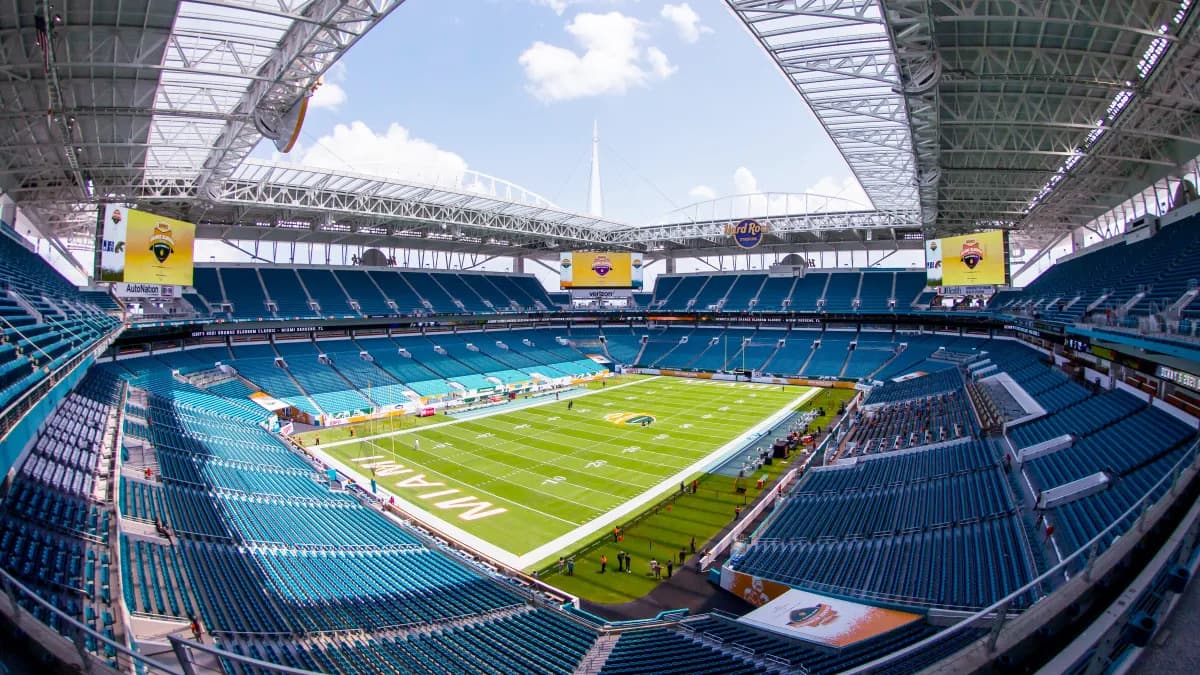
A complete directory of every youth soccer club, recreational program, and academy in Miami-Dade County for 2026. Covers competitive clubs (Inter Miami CF Academy, PSG Academy Miami, Albion SC, Miami Breakers FC, and 25+ more), recreational options from free city programs to franchise leagues, futsal academies, registration timelines, cost breakdowns, and what the 2026 World Cup at Hard Rock Stadium means for local families looking to sign up.
The World Cup Effect: How 2026 Is Changing Youth Soccer Registration
The 2026 FIFA World Cup triggered the largest youth soccer registration surge in US history. With 7 matches played at Miami's Hard Rock Stadium, a nationwide age group transition on August 1, and participation projected to reach 29 million, clubs need to be ready for fall.

Youth Soccer Club Growth: What to Do When 50 New Registrations Land at Once
Fifty new registrations is a win for any youth soccer club, but it immediately creates four pressure points: teams, coaches, fields, and money. This guide walks club directors through the math, the compliance timing, and the moment when separate apps stop being enough.