Así que dijiste que sí a entrenar al equipo de tu hijo. Quizás nadie más levantó la mano, quizás jugaste un poco de niño, y ahora estás mirando una lista de ocho niños de siete años y preguntándote qué haces realmente durante una hora. Entrenar fútbol U8 es uno de los trabajos voluntarios más gratificantes que existen, y también es mucho más sencillo de lo que temen la mayoría de los entrenadores primerizos. Esta guía te explica para qué están listos estos niños, las reglas que necesitas, una sesión que puedes repetir cada semana y los errores en los que cae casi todo entrenador nuevo.
¿Solo vienes por los juegos? Nuestro manual de ejercicios de fútbol divertidos para niños menores de 8 años tiene diez, además de una sesión de 45 minutos lista para usar. Esta guía cubre todo lo que rodea a los juegos: reglas, estructura, padres y trampas comunes.
Puntos clave
- Entrenar fútbol U8 se trata de diversión, contactos con el balón y movimiento, no de táctica ni de ganar.
- Cada niño necesita su propio balón durante la mayor parte del entrenamiento, porque los contactos con el balón son la forma en que aprende.
- Mantén las actividades cortas y los juegos pequeños, porque a esta edad la capacidad de atención se mide en minutos.
- No hagas filas, no des sermones y no dirijas desde la banda durante los partidos.
- Una sesión sencilla bien dirigida vale más que una ingeniosa mal dirigida.
Para qué están (y para qué no están) listos los jugadores U8
Un niño de siete u ocho años no es un adulto pequeño. Su cerebro y su cuerpo todavía están construyendo lo básico, y eso define todo sobre cómo lo entrenas.
Empieza por la atención. A esta edad, la concentración se mide en minutos, no en tiempos de partido. Como lo explica el recurso de entrenamiento juvenil Footy4Kids, la capacidad de atención de los niños pequeños es corta, y la mayoría no tiene la paciencia para un deporte muy organizado hasta alrededor de los seis años. Si una actividad dura más de unos pocos minutos, los perderás, y eso no es mal comportamiento. Es biología.
Luego está cómo ven el juego. Los niños pequeños son egocéntricos por su etapa de desarrollo, lo que significa que se orientan hacia el balón y les cuesta imaginar la cancha desde el punto de vista de otra persona. Su seguimiento visual de un balón en movimiento también sigue madurando hasta alrededor de los seis o siete años. Junta las dos cosas y obtienes lo que los entrenadores llaman con cariño el enjambre, el balón imán o la colmena: todos los niños persiguiendo el balón en un racimo gigante. Esa expresión es jerga de entrenadores, no un término oficial, pero el comportamiento es real y completamente normal. No intentes corregirlo a fuerza de instrucciones. Desaparece por sí solo a medida que se desarrollan.
La conclusión es liberadora. No estás formando estrategas. Estás ayudando a los niños a enamorarse del balón, a aprender a correr, frenar y cambiar de dirección, y a querer volver la semana siguiente. Según la metodología de base de US Soccer, el objetivo a esta edad es que los jugadores jóvenes vivan el juego y las situaciones de juego tanto como sea posible en un ambiente divertido y agradable. Si tus jugadores sonríen, se mueven y tocan el balón, estás entrenando fútbol U8 correctamente. Para ver el panorama general de cómo encaja esta edad en todo el recorrido de un jugador, nuestra guía completa para entrenar fútbol juvenil traza el camino desde aquí hasta las edades mayores.
Las reglas que necesitas saber (4v4)
El fútbol U8 en Estados Unidos se juega 4v4, y el formato lo establecen las Player Development Initiatives de US Soccer, los estándares de juego reducido que entraron en vigor en 2017. No necesitas memorizar un reglamento, pero algunos detalles importan.
A esta edad no hay porteros. Cuatro jugadores de campo por equipo, sin portero, en una cancha pequeña. El balón es número 3, el más pequeño, que es el adecuado para pies pequeños. La cancha también es pequeña, de aproximadamente 25 a 35 yardas de largo y de 15 a 25 yardas de ancho, así que la acción se mantiene compacta y cada niño está cerca del balón.
Un par de cosas que se aplican a los niños mayores todavía no se aplican. No hay fuera de juego antes de U9, y tampoco hay línea de salida en U8. La línea de salida, que fomenta sacar el balón jugando desde atrás, llega en U9, cuando el juego crece a 7v7. Así que en U8 puedes dejar que el juego fluya sin esas complicaciones.
La duración del partido es la única pieza que no es una regla nacional única. La define tu liga, y suele ser corta. Espera algo como cuatro cuartos breves, a menudo de entre ocho y doce minutos cada uno, con descansos cortos para que los niños tomen agua y tú hagas cambios. Revisa las reglas específicas de tu liga, pero el principio es el mismo en todas partes: tramos cortos con descansos frecuentes. El formato de juego reducido existe por una razón, y nuestro análisis de las formaciones de fútbol 4v4 para U6 y U8 muestra cómo pensar en la estructura sin sobrecargar a los niños.
Una estructura de sesión U8 que puedes repetir
Lo mejor que puedes hacer como entrenador primerizo es armar una sesión sencilla que puedas repetir con pequeñas variaciones cada semana. La constancia ayuda a los niños y te quita presión a ti. El enfoque de base de US Soccer, llamado Play-Practice-Play (jugar, practicar, jugar), te da el esqueleto.
Aquí tienes una versión de 60 minutos que funciona.
Jugar, los primeros 15 minutos. A medida que llegan los niños, ponlos directamente en un juego pequeño. Dos contra dos o tres contra tres a porterías pequeñas. Sin filas, sin esperas, sin sermón de calentamiento. Empiezan a jugar en cuanto pisan el césped. Tú observas y dejas que resuelvan los problemas por su cuenta.
Practicar, los 25 minutos del medio. Ahora trabajas un solo tema, como la conducción o el control del balón. Usa una actividad parecida al juego, no un ejercicio estático. Cada niño tiene un balón. Limita tus indicaciones a una frase corta y luego déjalos jugar otra vez. Si llevas más de quince segundos explicando, estás explicando demasiado.
Jugar otra vez, los últimos 20 minutos. Termina con un partido de práctica 4v4 que se parezca a un partido real. Aquí es donde el tema aparece de forma natural. Tú te quedas mayormente callado y observas, aplaudiendo el esfuerzo y dejando que lo descubran ellos.
Esa estructura se adapta a cualquier duración de sesión. Para plantillas más detalladas que puedes adaptar, nuestras plantillas de planes de entrenamiento de fútbol por categoría te dan puntos de partida listos para usar, y nuestra guía sobre cómo planificar un entrenamiento de fútbol juvenil muestra cómo llenar una hora sin tiempos muertos.
Tres actividades que funcionan siempre
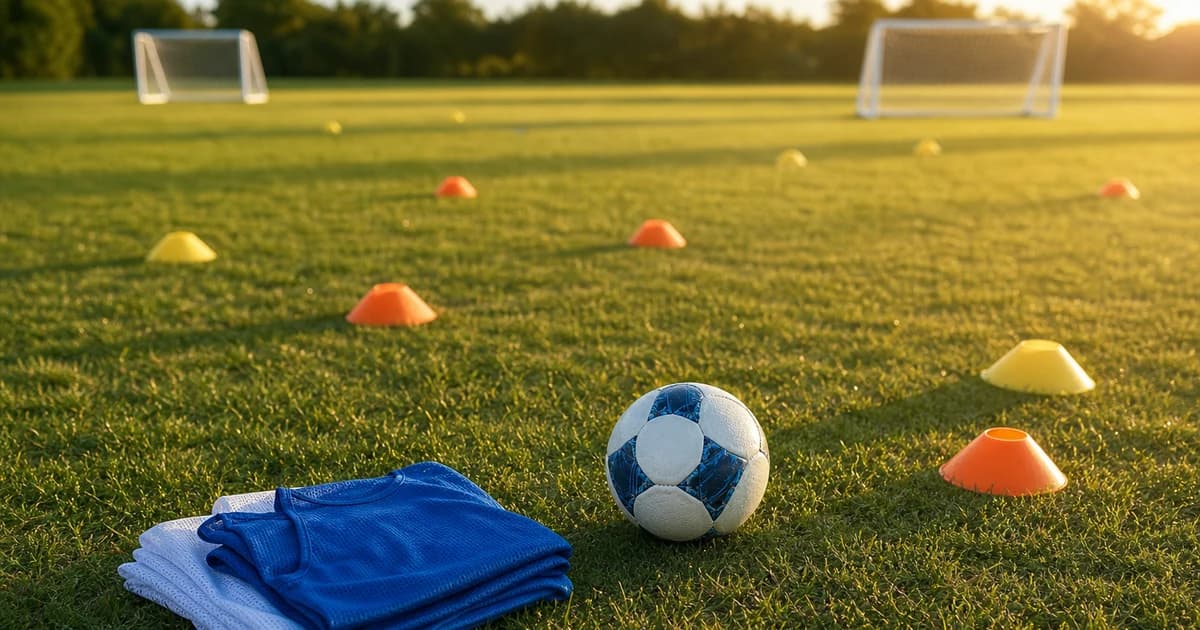
No necesitas equipo sofisticado. Conos, balones y unos cuantos petos cubren todo. Aquí tienes tres juegos de cabecera que mantienen enganchados a los jugadores U8, con la habilidad que desarrolla cada uno.
Tiburones y pececitos. La mayoría de los jugadores son pececitos, cada uno con un balón, conduciendo de un lado a otro de un cuadrado. Uno o dos tiburones sin balón intentan sacarles el balón a los pececitos de una patada. Desarrolla la conducción bajo presión y les enseña a los niños a mantener el balón cerca y la cabeza levantada para ver el espacio.
Luz roja, luz verde. Los jugadores conducen hacia adelante con la luz verde y frenan el balón en seco con la roja. Desarrolla el control cercano, el frenado y la escucha, todo envuelto en un juego que ya conocen.
Eliminación. En un cuadrado, todos conducen e intentan proteger su propio balón mientras sacan los balones de los demás. Los jugadores eliminados hacen una tarea rápida y vuelven a entrar en segundos, así que nadie se queda sentado. Desarrolla la protección del balón y el control cercano.
Fíjate en lo que tienen en común. Cada niño tiene un balón la mayor parte del tiempo, nadie hace fila y cada uno es un juego, no un ejercicio. Ese es todo el secreto a esta edad.
Tres juegos bien dirigidos te alcanzarán para semanas, y no hace falta reinventarlos aquí. Cuando quieras más opciones, nuestro manual de ejercicios de fútbol divertidos para niños menores de 8 años reúne diez juegos como estos, además de qué hacer los días en que una sesión empieza a desmoronarse.
Los errores de los entrenadores primerizos
Casi todo entrenador nuevo de U8 comete el mismo puñado de errores. Conocerlos de antemano te ahorra una temporada de aprender a golpes.
El primero es entrenar de más. Los entrenadores nuevos a menudo sienten que tienen que corregir cada contacto y dirigir cada movimiento. Las instrucciones constantes en realidad frenan a los niños y van minando su confianza. El recurso de entrenamiento The Coaching Manual y otros lo dicen sin rodeos: déjalos jugar y tomar sus propias decisiones. Tu trabajo es preparar buenas actividades, no narrarlas.
El segundo son las filas. En el momento en que los niños están parados en una fila esperando su turno, has perdido la mayor parte del valor del entrenamiento. US Soccer menciona específicamente hacer filas y correr vueltas como el tipo de actividad que hay que evitar. Si ves que se forma una fila, divídela en más grupos o en juegos más pequeños.
El tercero son los sermones. Los niños vinieron a correr y jugar, no a sentarse y escuchar. Las explicaciones largas dejan a los niños de siete años abrumados y aburridos. Limita cada indicación a una frase, muestra más de lo que dices y vuelve a ponerlos en movimiento.
El cuarto es el extremo opuesto, la sesión que es solo partido. Sacar un balón y dejarlos jugar todo el tiempo parece fácil, pero se salta el aprendizaje dirigido del medio. La estructura Play-Practice-Play existe precisamente para que haya algo de enseñanza real entre las dos fases de juego.
El último es el más grande: centrarse en ganar. En U8, el marcador no importa, y presionar para ganar genera presión y agotamiento en niños que deberían estar enamorándose del juego. A esta edad, primero el desarrollo, y los resultados nunca.
Unas palabras sobre los padres y el día de partido
Entrenar U8 es mitad cosa de los niños y mitad cosa de los adultos en la banda. Unos minutos para fijar expectativas con los padres te ahorran una temporada de roces.
Diles desde el principio de qué se trata esta edad: diversión, contactos con el balón y esfuerzo, no el marcador. Pídeles que aplaudan el esfuerzo en lugar de dirigir desde la banda, porque un niño que escucha instrucciones de un entrenador, un padre y un compañero al mismo tiempo simplemente se paraliza. Y hazles saber que un niño que llora en el primer entrenamiento, que mete un gol en su propia portería o que se sienta a mitad del partido a mirar un insecto es completamente normal y no un problema que haya que arreglar.
El día de partido, tu trabajo apenas cambia respecto al entrenamiento. Haz cambios frecuentes para que todos jueguen bastante, mantén una actitud positiva sea cual sea el marcador y resiste las ganas de gritar instrucciones tácticas. Déjalos jugar.
Una cosa más ayuda muchísimo: apréndete rápido los nombres de los niños y úsalos todo el tiempo. A esta edad, sentirse visto por su entrenador importa más que cualquier ejercicio. Un entrenador que conoce cada nombre, da ánimos concretos y hace que cada niño sienta que pertenece mantiene unido al equipo mucho mejor que el entrenador con más conocimientos técnicos que los trata como un grupo. En U8, la relación es el entrenamiento, y los niños que se sienten libres y felices ahora son los que siguen en la cancha en U12.
Aférrate a esa idea los días en que un entrenamiento parezca como intentar arrear gatos. No solo estás dirigiendo ejercicios. Le estás dando a un niño su primera relación con un deporte que puede durarle toda la vida, y a esta edad, esa es toda la victoria.
Preparar sesiones más rápido
Esta es la verdad sincera sobre entrenar como voluntario. Lo más difícil no es la hora en la cancha. Es la página en blanco la noche anterior, cuando estás cansado e intentando decidir qué vas a hacer mañana.
Ese es el problema con el que ayuda Game Plan de Centro. Les da a tus entrenadores ejercicios, sesiones de entrenamiento, formaciones y una pizarra táctica en un solo lugar, y Centro AI puede ayudar a preparar una sesión U8 (un juego de calentamiento, una actividad de práctica con indicaciones para el entrenador y un juego final) para que un entrenador la revise antes de usarla, así nunca vuelves a quedarte mirando esa página en blanco. Nuestras herramientas para entrenadores y Game Plan están hechos precisamente para el voluntario primerizo que quiere llegar preparado.
¿Es tu primera vez entrenando U8? Centro AI puede ayudar a preparar una sesión adecuada a la edad para que tú la revises, y así puedes dedicar tu tiempo de preparación a aprenderte los nombres de los niños. Conoce la parte de entrenamiento de Centro.