Hurricane Preparedness for Youth Soccer Clubs: A South Florida Playbook
Hurricane preparedness for youth soccer clubs in South Florida starts in May, not in September. We cover the five-part club EAP, cancellation and refund policy, and the bilingual storm comms that reach Spanish-speaking families.
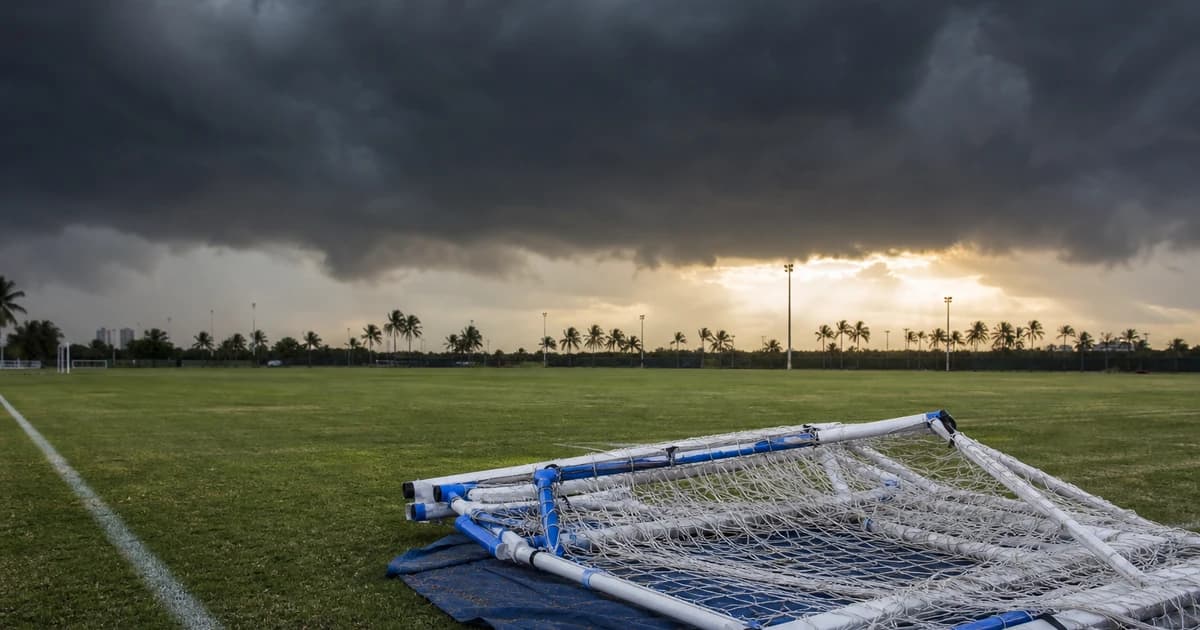
On this page
Hurricane preparedness for youth soccer clubs is the kind of work that costs nothing in May and saves the season in September. National Hurricane Preparedness Week runs May 3 to May 9, 2026, the Atlantic hurricane season officially opens June 1, and the National Hurricane Center begins issuing Tropical Weather Outlooks on May 15. South Florida clubs that wait until the first storm name appears on the radar are already late. This guide covers a five-part club emergency action plan, the cancellation and refund policy you need in writing, and how to push bilingual storm communications that actually reach Spanish-speaking families.
Key Takeaways
- Hurricane preparedness for youth soccer clubs needs to be in place before June 1, when the Atlantic season opens.
- Colorado State University's 2026 forecast calls for 13 named storms, 6 hurricanes, and 2 major hurricanes; AccuWeather's range is 11 to 16 named storms with 4 to 7 hurricanes.
- Every club needs a five-part EAP: communication chain, field and equipment plan, cancellation/refund policy in writing, financial reserve, and bilingual messaging.
- Spanish-speaking families need storm comms in Spanish from day one, not English-only with Google Translate as a fallback.
- The cancellation and refund framework belongs in the bylaws or parent handbook, not invented during a storm.
Why Hurricane Preparedness for Youth Soccer Clubs Matters in 2026
The 2026 Atlantic hurricane season runs June 1 through November 30, per the National Hurricane Center. Colorado State University's April 2026 Extended Range Forecast calls for 13 named storms, 6 hurricanes, and 2 major hurricanes, with an ACE index of 90. AccuWeather's 2026 outlook is in a similar range: 11 to 16 named storms, 4 to 7 hurricanes, and 2 to 4 major storms. El Niño conditions are expected to dampen activity somewhat, but for a Miami-Dade club that means the difference between many storms and several. One named storm reaching Florida will still cancel a weekend.
The Aspen Institute's Project Play State of Play 2024 reports that more than four in 10 youth sports coaches have never received training in safety, injury prevention, or related areas. A volunteer coach who has never run a club through a hurricane should not have to write the EAP at 11 PM on the night Florida's governor declares a state of emergency. The work has to be done in May.
Our South Florida youth soccer guide covers the seasonal calendar; this post is the operational counterpart for storm season specifically.
The Five-Part Club Emergency Action Plan
A working club EAP sits on five anchors. Every club, regardless of size, should have all five written down before June 1.
1. The communication chain
Three people should be authorized to issue a club-wide cancellation: the club director, the director of coaching, and one designated parent volunteer. The chain has to function if any one person loses power or evacuates. Decision triggers should be written down: any tropical storm watch within 72 hours, any hurricane watch, any local government shelter-in-place order, any evacuation order issued at floridadisaster.org.
2. Field and equipment plan
Identify which fields are at risk of flooding (most coastal South Florida fields are). Document where portable goals, cones, equipment bags, scoreboards, and AED kits get stored when a storm is forecast. Pre-position tarps and storage tubs. The drill takes a Saturday morning in May; doing it the day before landfall is too late.
3. Cancellation and refund policy in writing
This is the single most-skipped step at small clubs and the one that creates the most parent friction. The policy should answer: when does the club cancel a practice or game, when does it cancel an entire week of programming, when does it refund a registration, and when does it offer credit to a future season instead of cash. Our soccer club bylaws template includes a force-majeure clause structure that holds up legally and reads fairly to families.
4. Financial reserve
A club running on a single season's registration revenue is one storm-cancelled tournament away from a real cash crunch. Build a reserve equal to one to two months of operating expenses, including insurance, field rental, and refund obligations. The reserve sits in a separate bank account, not commingled with the operating account.
5. Bilingual messaging discipline
If 30 percent or more of your families primarily communicate in Spanish, every storm communication has to ship in Spanish at the same time it ships in English, in the same channel. We cover the discipline behind that in our bilingual youth soccer club guide. Translation done after the fact is a delay families notice.
Cancellation and Refund Policy: What to Write Down
The policy belongs in the parent handbook and the registration confirmation. The structure that holds up:
- Single-day cancellations (storm passes, no damage): no refund or credit; sessions made up where possible. Communicated by 6 AM the day of for morning sessions, 2 PM for evening.
- Multi-day cancellations (1 to 3 days): credit toward a future season, not cash refund.
- Storm-related extended closure (more than 1 week): partial cash refund pro-rated against remaining sessions, plus credit option, family choice.
- Catastrophic event (declared disaster damaging fields): full refund or full credit at family option, with the financial reserve covering the gap.
Our parent communication templates include English and Spanish starter language for each of these categories. The point is that families know what to expect before a storm forms, not after.
Free resourceSeason plannerMap out a season week by weekBilingual Storm Comms That Actually Reach Spanish-Speaking Families
The communication channels that work in a South Florida storm environment are not email. They are SMS and WhatsApp, with the club website as a single source of truth that updates automatically. A bilingual storm communication template covers four moments:
- 72 hours out (storm watch issued): "We are monitoring [storm name] and following Florida Disaster guidance. Practice continues until further notice. We will update by [time]."
- 48 hours out (likely cancellation): "Practice and games for [days] are cancelled. Refund/credit policy details at [link]. We will update by [time]."
- Storm passing (during): Single message: "Stay safe. We will reach out after the storm clears."
- After clearance: Field-by-field update on which fields are safe to use, when programming resumes.
Each message ships in Spanish and English at the same time, in the same channel, signed by the same person. Our volunteer coach onboarding guide covers the chain of communication for every coach the club authorizes to send messages, which matters during a storm when the director is offline.
How Centro Helps Run Storm Comms
Centro's communications module pushes a single storm message in each parent's preferred language at once: Spanish-default families get Spanish, English-default families get English, both languages live on the club website. The website builder hosts the EAP document and the cancellation/refund policy as a public page parents can link to from a WhatsApp message. Coaches and staff can pre-build storm-message templates so the director only has to update the storm name and the dates. The platform runs at $25 per month flat for the club.
A Real Storm-Week Scenario for a Hialeah Club
A 220-player Hialeah club tracks a Cat 1 storm forming in the Gulf on a Wednesday. The director uses the pre-built templates: 72-hour watch message goes out Wednesday night to all parents in Spanish and English. Thursday morning, the storm strengthens to Cat 2; the 48-hour cancellation message goes out cancelling Thursday evening practice through Saturday games. The cancellation/refund policy is already linked in the message, so parents know not to ask. Friday and Saturday, the storm passes south. Sunday morning, the club inspects fields and sends the all-clear: practice resumes Monday. No refund disputes, no parents in the dark, no last-minute Spanish translation scramble. That is what hurricane preparedness for youth soccer clubs looks like in practice.
Frequently Asked Questions
When should a Florida club start hurricane prep? By the end of May, ahead of the June 1 season start. National Hurricane Preparedness Week is May 3 to 9 every year for a reason.
Does a club need a separate insurance policy for hurricanes? Most general-liability club policies do not cover hurricane field damage or program-cancellation losses. Talk to your insurance broker before June 1 about a business-interruption rider.
What is the most-skipped piece of club storm prep? The written cancellation and refund policy. Clubs that skip this step end up making policy in the middle of a storm with angry parents on the line.
Where do families check Florida-specific evacuation orders? Floridadisaster.org maintains the active evacuation-order list for all 67 counties.
We built Centro so a Hialeah club director running a 220-player program does not need to spin up a separate website host, a separate parent-comms tool, and a separate refund-tracking spreadsheet during a storm. It is one platform with bilingual workflows from day one. See what Centro does for club directors.
Keep reading
More on running a better club.
How to Run a Soccer League: The Season Operations Playbook
A league season runs through eight stages, and most mid-season disputes trace back to a decision made before registration opened. This playbook covers what to settle first, how divisions become a fixture list, what to do when a weekend falls apart, and how to close a season so the next one is cheaper to run.
Soccer Club Sponsorship Letter, Tiers & Outreach Playbook
A working soccer club sponsorship letter is the difference between $0 and $15,000 in jersey-and-banner revenue this season. We cover the five-part letter, the three-tier package, the IRS rules that keep your 501(c)(3) clean, and the bilingual outreach playbook for South Florida.
Florida Level 2 Background Screening for Youth Coaches: What's Required Now
Florida’s Level 2 fingerprint screening requirement has applied since July 1, 2026, per F.S. 943.0438. We cover what the statute requires, how SB 1546 set that date, and the compliance steps a club needs to have in place now.