World Cup 2026 in Miami: The Youth Soccer Parent's Complete Guide
On this page
The 2026 FIFA World Cup came to Miami, and for families with young soccer fans it was a summer unlike anything we have seen in our lifetimes. Seven matches at Hard Rock Stadium. Brazil, Portugal, Colombia, and more of the world's best teams playing less than 30 minutes from downtown. Free festivals, youth tournaments, and community events running for weeks.
If your child already plays soccer (or has been asking to start), the World Cup 2026 Miami youth soccer season is the perfect moment to turn that excitement into something lasting. This guide covers everything Miami soccer families need to know: the full match schedule, family-friendly events, how to get your kid into organized play, and what to look for in a local club.
Key Takeaways
Hard Rock Stadium hosts seven World Cup matches between June 15 and July 18, 2026, including Brazil vs. Scotland and Portugal vs. Colombia.
The FIFA Fan Festival at Bayfront Park is free, runs for 23 days, and includes dedicated youth soccer activities.
A Youth World Cup tournament organized by the Miami Host Committee features 2,000+ teams from U8 to U18.
Fall 2026 recreational registration typically opens July through August, with competitive tryouts in May and June.
This is the best time to get your child into organized youth soccer in South Florida.
Miami's World Cup 2026 Youth Soccer Match Schedule
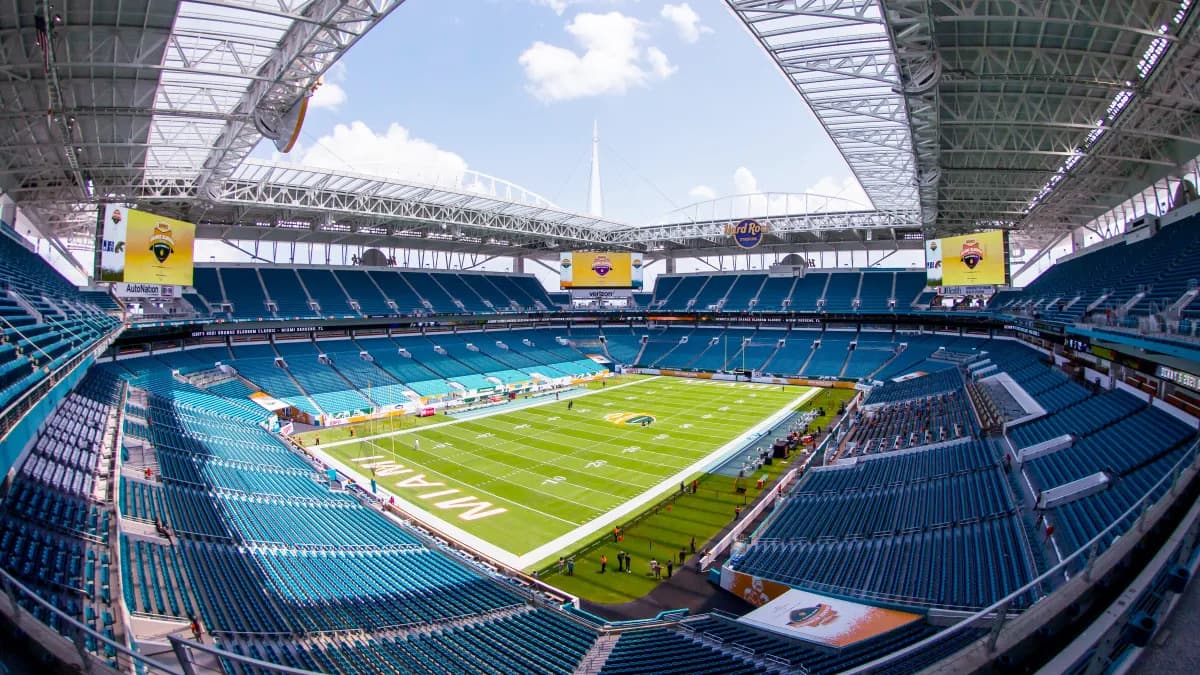
Hard Rock Stadium in Miami Gardens hosted four group stage matches, one Round of 32 knockout game, a quarterfinal, and the bronze final (third-place match) between 15 June and 18 July 2026. Here is the schedule as played, per FIFA (source: FIFA.com and CBS Miami):
Match 1: Saudi Arabia vs. Uruguay Sunday, June 15 at 6:00 PM ET (Group H)
Match 2: Uruguay vs. Cape Verde Saturday, June 21 at 6:00 PM ET (Group H)
Match 3: Brazil vs. Scotland Wednesday, June 24 at 6:00 PM ET (Group C)
Match 4: Portugal vs. Colombia Saturday, June 27 at 7:30 PM ET (Group K)
Match 5: Round of 32 Friday, July 3 at 6:00 PM ET (Winner Group J vs. Runner-up Group H)
Match 6: Quarterfinal Friday, July 11 at 5:00 PM ET (Teams TBD)
Match 7: Bronze Final (Third-Place Match) Saturday, July 18 at 5:00 PM ET
Which Matches Matter Most for Local Families
The Brazil vs. Scotland and Portugal vs. Colombia group matches are the biggest draws for South Florida families. Miami-Dade County is approximately 69% Hispanic or Latino (source: Miami-Dade Beacon Council), with large Brazilian, Colombian, and Portuguese-speaking communities. These two matches will feel like home games.
The bronze final on July 18 is also worth watching. It is the most affordable knockout-stage match, and it lands on a Saturday, making it the easiest for families with young kids.
Ticket Pricing and Family-Friendly Options
FIFA offers tickets across three pricing categories based on seat elevation. Prices below are face value in USD before a 15% service fee (source: FIFA.com/tickets and Jetpac Global):
Group Stage (Category 3, lowest tier): $180 to $265 per seat depending on the match
Round of 32 (Category 3): $270 per seat
Quarterfinal (Category 3): $735 per seat
Bronze Final (Category 3): $455 per seat
Category 1 (premium): Ranges from $500 for group matches up to $1,445 for the quarterfinal
FIFA also introduced a limited $60 "Supporter Entry" tier through national football associations, but only about 520 tickets per team per match fall into this category (source: Matador Network). Children aged two and under may attend on a parent's lap without a ticket.
There is no formal family ticket package. For the most budget-friendly option, the Uruguay vs. Cape Verde match on June 21 starts at $180 (Category 3) before fees. Tickets are sold exclusively through FIFA.com/tickets. Phase 4 "last-minute" sales open in early April 2026, and the official resale platform reopens April 2, 2026.
Free and Family-Friendly World Cup Events in Miami
You do not need a match ticket to experience the World Cup with your kids. Miami has a full calendar of free and low-cost events that run alongside the tournament.
FIFA Fan Festival at Bayfront Park
The official FIFA Fan Festival will take over Bayfront Park, a 32-acre waterfront space in downtown Miami with free Metromover access. It runs from June 13 through July 5, 2026, with free admission and capacity for up to 30,000 fans daily (source: Miami Host Committee and Axios Miami).
The festival includes live screenings of all Miami matches (plus 80+ total World Cup games) on giant LED screens, concerts, cultural performances, fireworks, and food from across Miami's culinary scene. For kids, there are dedicated youth soccer activities and interactive fan zones within the festival grounds.
The Bayfront Park location sits right on Biscayne Bay. One of the standout attractions is "Soccer on the Bay," a performance featuring jet-pack-powered athletes playing with an oversized ball on the water.
Youth World Cup Tournament
The Miami Host Committee is running what it calls the largest grassroots youth soccer event in American history. The Miami 2026 Youth World Cup is open to 2,000+ teams in boys and girls divisions from U8 to U18 (source: SoccerWire and GotSport).
The tournament features recreational and competitive brackets (Gold, Silver, Bronze tiers), with entry fees kept deliberately low at $300 to $750 per team. Championship finals are scheduled for May 28 through June 1, 2026, at Amelia Earhart Park in Hialeah. Top-performing teams may earn the chance to attend World Cup matches and be recognized on the field at Hard Rock Stadium.
Free Clinics and Community Events
The host committee's ONE GAME ONE FUTURE initiative runs free youth soccer clinics with coaching education workshops and health screenings across every Miami-Dade County commission district from March through June 2026 (source: Xchangetickets). Each clinic features two hours of structured play, skills training, and guided mentorship for boys and girls.
Additional watch parties are planned at Lummus Park on South Beach (June 11 opening day), the Miami Beach Bandshell (July 18 and July 19 for the bronze and World Cup finals), and across Lincoln Road.
What to Expect for Kids at the Stadium
Hard Rock Stadium holds approximately 65,000 fans. Arrive early with kids. Expect heightened security, mobile-only tickets delivered via QR code in the FIFA World Cup 2026 app, and extended Metrorail and shuttle service from downtown. Pack sun protection (the stadium canopy helps, but Miami in June is still Miami).
How to Get Your Kid Started in Youth Soccer
The World Cup sparked the interest. The question now is what comes next. Here is a quick breakdown of how youth soccer works in South Florida and what it costs.
Recreational vs. Competitive Pathways
Recreational soccer is the entry point. Programs like AYSO, i9 Sports, municipal park leagues, and Florida Youth Soccer League teams offer one practice per week plus weekend games. No tryouts required. Seasons typically run 8 to 10 weeks. This is the right fit for most kids who are just starting out.
Competitive (travel) soccer requires tryouts, involves multiple practices per week, and includes tournament travel. Clubs compete through leagues like SFUYSA, ECNL, NPL, and MLS NEXT. The commitment is significantly higher in both time and money.
Age Groups and What to Expect
U6 (ages 4 to 5): Small-sided games (3v3 or 4v4), focus on fun and basic coordination. Sessions are 30 to 45 minutes.
U8 (ages 6 to 7): Introduction to positions and simple tactics. Games are 4v4 or 5v5.
U10 (ages 8 to 9): Players begin learning formations. Games move to 7v7.
U12 (ages 10 to 11): More structured training, 9v9 games, and introduction to competitive tryouts.
U14 (ages 12 to 13): Full-field 11v11 play, position-specific coaching, and tournament travel.
One important note: US Youth Soccer is shifting from a January-to-December birth-year system to an August 1 through July 31 school-year alignment starting with the 2026-2027 season (source: US Youth Soccer). This means some players may shift age groups. Ask your local club how they are handling the transition.
Registration Timelines
For fall 2026 in South Florida, here is what to expect:
Recreational programs (AYSO, i9, municipal leagues): Registration opens one to two months before season start, typically June through August.
Competitive clubs: Tryouts run in May and June, with registration and payment deadlines in July and August.
Elite programs (ECNL, MLS NEXT): Tryouts may begin as early as May 1 per FYSA rules.
The World Cup schedule (June 15 through July 18) overlaps with the traditional tryout window. Some clubs may shift tryouts earlier or later. Check directly with any club you are considering.
Cost Expectations
Youth soccer costs vary widely depending on the level of play (source: PlayClubSoccer.org and the Aspen Institute State of Play 2025):
Recreational: $75 to $500 per season
Competitive club (U9 to U10): $1,300 to $2,000 per year
Competitive club (U13+, ECNL/NPL level): $2,000 to $5,000+ per year
The average American soccer family spends $1,188 a year on the sport, making soccer the most expensive of the four major youth sports (Aspen Institute Project Play, State of Play 2025, 2024 data). Tournament travel, uniforms ($65 to $250), and "stay-to-play" hotel requirements can push competitive costs much higher. Most clubs offer payment plans, and some provide need-based financial aid.
Use our fee calculator to estimate what your family might spend per season.
Scenario: From the Stadium to the Field
A parent takes their seven-year-old daughter to the Brazil vs. Scotland match on June 24. The crowd is singing, flags are waving, and the kid cannot stop talking about it on the drive home. She wants to play.
Here is what that parent does next. First, check local recreational programs. AYSO and i9 Sports both offer no-tryout fall leagues that open registration in July. Second, search for clubs near your neighborhood (more on that below). Third, attend one of the free ONE GAME ONE FUTURE clinics running through June to let your daughter try organized play with zero commitment. By August, she is registered, has her first practice scheduled, and the excitement from that night at Hard Rock has turned into a real activity.
That is the World Cup Effect on youth soccer registration in action.
Youth Soccer Clubs in the Miami Area
Miami-Dade County has dozens of youth soccer clubs spread across every sub-region. Here is a brief overview organized by area. (Club details reflect publicly available information as of spring 2026. Contact clubs directly to confirm current programs, pricing, and registration.)
Kendall
The competitive hub. Miami Futbol Academy Rush is the area's top-tier club and participates in MLS NEXT from U13 to U19, with development programs starting at U6. AYSO Region 450 and West Kendall Optimist offer recreational options.
Doral
Doral Soccer Club is the only ECNL-affiliated club within Miami-Dade County, running boys' ECNL, Regional League, and pre-ECNL programs. Doral West Soccer Academy offers a more developmental path for younger players.
South Miami and Pinecrest
Pinecrest Premier Soccer Club fields select teams through SFUYSA. Miami FC Academy is the official USL Championship youth pathway for ages 4 to 20. Miami Breakers FC offers both recreational and competitive tracks with locations in Coconut Grove and surrounding areas.
Homestead
Southern Homestead Soccer Academy competes through SFUYSA and has qualified for the National Academy League. Homestead Soccer runs a grassroots recreational program with a fall season from August through November.
Hialeah and Miami Lakes
Miami Lakes United Soccer Club is a nonprofit offering recreational, academy, and competitive travel programs at Royal Oaks Park. i9 Sports provides a no-tryout recreational alternative in the area.
North Miami and Aventura
FBS-FC offers competitive and beach soccer programs led by FIFA/CONCACAF-licensed instructors. Miami Shores Soccer Club has recreational "Little Kickers" starting at age 3 and travel teams from age 6.
Coral Gables and Coconut Grove
The City of Coral Gables runs municipal soccer through Parks and Recreation, including Young Stars recreational and competitive travel teams. Athletic Club Miami in Coconut Grove uses a European-style coaching methodology.
We are publishing a full directory of every youth soccer club in Miami-Dade tomorrow. Check it out here: Youth Soccer Clubs in Miami: 2026 Directory.
What to Look for When Choosing a Club
Three things matter more than most parents realize:
Bilingual communication. In a county where approximately 66% of households speak Spanish at home (source: Census data via Florida Demographics), your club should communicate in both English and Spanish. If a club only sends emails and updates in one language, a large portion of families are left out.
Coaching credentials. Look for USSF, USC, or FYSA-licensed coaches. Ask whether the club requires background checks for all staff. A good club will tell you upfront.
Cost transparency. Registration fees are just the start. Ask about uniform costs, tournament fees, travel expectations, and whether payment plans are available. The best clubs publish this information clearly on their websites.
Making the Most of the World Cup Moment
The match ends. The excitement fades. Then what? The biggest risk for World Cup 2026 Miami youth soccer families is not getting started. It is losing momentum because the club experience does not match the excitement.
Sustaining Your Child's Interest
Kids stay engaged when they feel connected to a team, not just a sport. That means regular communication from the club: practice schedules, game results, photos from sessions, and clear expectations for parents and players.
If your child signs up and hears nothing for weeks, the spark dies. A good club keeps families in the loop from day one.
Scenario: Two Very Different Club Experiences
A family signs up their eight-year-old son for a local club in early July, right after attending the Fan Festival. They fill out a paper form, hand over a check, and hear nothing. No welcome email. No schedule. August arrives and still nothing. The parent texts the coach on WhatsApp, gets added to a group with 150 unread messages, and still cannot find the practice times. By September, the kid has moved on.
Now picture a different club. The same family registers online, receives a bilingual welcome message within 24 hours (in both English and Spanish), sees the full season schedule, gets a breakdown of their payment plan, and can access everything from their phone. The child shows up to the first practice knowing their coach's name, their team color, and exactly where to be. That family is still playing in December.
The difference is not coaching quality or field access. It is how the club communicates with families. Clubs that use tools like Centro (a bilingual platform built specifically for youth soccer) can set up online registration, send bilingual messages, publish schedules, and collect payments from a single dashboard. It is the kind of infrastructure that keeps families involved long after the World Cup crowds go home.
Why Bilingual Clubs Matter in Miami
This is not a nice-to-have. In a county where 69% of residents are Hispanic or Latino and more than half of all households are primarily Spanish-speaking, a club that only communicates in English is excluding a huge portion of its community.
The Miami Host Committee's legacy programs are investing in exactly this: reaching underserved, primarily Spanish-speaking neighborhoods through the U.S. Soccer Foundation's "Just Ball" program and the construction of 50 mini-pitches in communities that need them (source: U.S. Soccer Foundation). The goal is to positively impact 30,000 youth by the end of 2026.
That investment means nothing if the clubs those kids walk into cannot communicate with their parents. If you are searching for the right fit, our resources for parents page is a good starting point. Ask whether the club sends updates, registration forms, and payment information in Spanish. It tells you a lot about how seriously they take their community.
Your Next Step
The World Cup came to your backyard. Seven matches, a free festival, community clinics and a 2,000-team youth tournament, all within half an hour of downtown. The tournament is over; the clubs it filled are still taking registrations, and this is still a good moment to get your child into soccer in Miami.
Keep reading
More on running a better club.

How to Get Kids Into Soccer Miami (World Cup Edition)
The 2026 FIFA World Cup is live in Miami, and it is the best moment to get your child into soccer. This guide covers starting age, the difference between rec and club, where to sign up in Miami-Dade, and what changes on August 1.
How to Choose a Youth Soccer Club: A Miami Parent's Guide
Choosing a youth soccer club comes down to matching the program to your child, not the other way around. This guide covers the four-tier pathway, the ten questions every parent should ask before signing, real cost ranges by level, and the red flags to walk away from, with Miami as the worked example.
The World Cup Effect: How 2026 Is Changing Youth Soccer Registration
The 2026 FIFA World Cup triggered the largest youth soccer registration surge in US history. With 7 matches played at Miami's Hard Rock Stadium, a nationwide age group transition on August 1, and participation projected to reach 29 million, clubs need to be ready for fall.