11v11 Youth Soccer Formations: 4-3-3, 4-2-3-1, 3-5-2 Explained
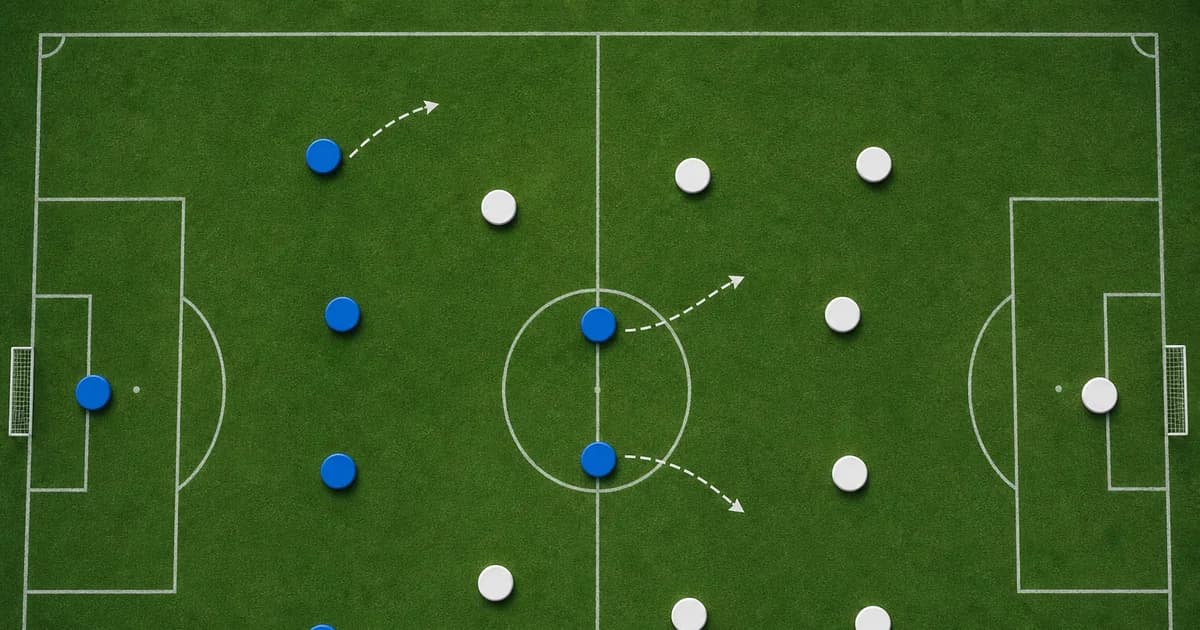
11v11 Youth Soccer Formations: 4-3-3, 4-2-3-1, and 3-5-2 Explained for U13 and Up
Picking 11v11 youth soccer formations is the moment a coach realizes the game has changed. Field size jumps, the team grows from nine to eleven, and positional play stops being optional. Per Trace's coverage of the 9v9-to-11v11 transition, a 20-yard breakaway in 9v9 becomes a 50-yard run in 11v11, and the players who dominated on speed alone start to learn the value of positioning. We cover the three formations U13-U14 coaches use most, what each one teaches young players, and how to pick between them.
Key Takeaways
- 11v11 youth soccer formations should be picked for development, not for winning. The U13-U14 stage is the introduction to the full game; multi-position rotation matters more than tactical perfection.
- The 4-3-3 emphasizes attacking width and three-forward pressure but demands high-fitness wingers. Per the US Soccer Player Development Framework U13 Learning Plan, this is the U.S. preferred development shape.
- The 4-2-3-1 builds on the 4-3-3 with a double-pivot defensive shield and a clear playmaker (the number 10), giving young players defined roles to learn.
- The 3-5-2 creates wide-midfield overloads and gives the team two strikers, but demands wing-back conditioning rare at U13.
- 9v9 to 11v11 transition is about field size and positional discipline, not new skills. Teams that drilled 9v9 shapes well make the jump cleanly.
Why Formation Matters Less Than Most Coaches Think (Until U14)
US Soccer's player development framework is explicit about the priority order: development first, results second, until at least U14. The official US Soccer Grassroots 11v11 framework recommends rotating young players through multiple positions across a season so each player learns where they actually fit. A pure 4-3-3 deployed week after week with the same kid in the holding-midfield role for a full year does the player a disservice when she shows up at U15 tryouts with no defensive instincts.
The formation is a teaching tool, not a result-optimizing strategy. Pick the shape your players can execute; rotate the roles within it; let the wins fall where they fall. Our complete guide to coaching youth soccer covers the same development-first principle across the full coaching pillar.
The 4-3-3: U.S. Default for Development
The 4-3-3 is four defenders, three midfielders, three forwards. Per BlazePod's breakdown of the formation principles, the three-midfielder structure typically uses one holding midfielder (the pivot) with two more advanced central midfielders on either side, plus three forwards: a center forward and two wide attackers (often inverted wingers).
What the 4-3-3 teaches young players.
- Wing play and width. The wingers stay high and wide, stretching the opposition.
- Possession-based midfield rotations. Three midfielders create natural triangles for short passing.
- Positional defending. The full-backs do not naturally bomb forward; they hold the back line until the team is set.
What you need to make it work.
Three midfielders who can run all day. The wingers in particular have to defend their flank and attack their flank, which is a high fitness ask at U13. If your team only has two players with that engine, the 4-3-3 collapses into a 4-5-1 in defense and never recovers.
When the 4-3-3 hurts. Against a 3-5-2, the 4-3-3 leaves both center backs pinned by the two strikers, while the opponent's wing-backs push against your fullbacks into 1-on-1 situations across the pitch, per Rondo Coach's modern 4-3-3 analysis. If your back four cannot win 1-on-1s, the formation breaks.
The 4-2-3-1: Balance and Defined Roles
The 4-2-3-1 is four defenders, two holding midfielders (the double pivot), three attacking midfielders behind a single striker. Per BlazePod's 4-2-3-1 breakdown, this is widely considered the most balanced modern shape.
What the 4-2-3-1 teaches young players.
- Defined roles. Every position has a clear job: the two pivots shield, the number 10 attacks, the wide attacking midfielders stretch and tuck, the lone striker holds the line.
- Defensive discipline. The double pivot is harder to bypass than a single holding midfielder; young players learn the geometry of defensive midfield.
- Playmaking. The number 10 role is one of the most teachable creative positions; rotate players through it.
What you need to make it work.
A single capable lone striker (or two who can split duty) and two holding midfielders willing to share. The number 10 needs to be a player who can take the ball under pressure between the lines. If you do not have one, the formation reads as a 4-2-4-0 and the attacks die in midfield.
When the 4-2-3-1 hurts. When both pivots get pulled forward and the back four is exposed. Discipline at U13 is hard; a coach committing to the 4-2-3-1 has to drill the pivot rotation every week.
The 3-5-2: Width, Two Strikers, and Wing-Back Endurance
The 3-5-2 is three center backs, five midfielders (two wide wing-backs, three central), and two forwards. The shape produces wide-midfield overloads and two strikers always available, but demands wing-backs with the conditioning of a marathoner. At U13 that rarely exists.
What the 3-5-2 teaches young players.
- Wide-midfield play. The wing-backs become the offensive width and the defensive cover in one role.
- Two-striker partnerships. The two forwards develop instinct combinations rare in single-striker shapes.
- Defensive density in the middle. Three center backs plus three central midfielders crowd the center of the pitch.
What you need to make it work.
Two wing-backs with full-game running ability. This is the ask the formation rises or falls on. Most U13 teams have one, maybe two players who can do this; below that, the 3-5-2 becomes a 5-3-2 in defense because the wing-backs sit in.
Picking Between Them: A Simple Decision Tree
Three quick questions:
- Do you have three midfielders who can each play all 80 minutes? If yes, 4-3-3 or 4-2-3-1. If no, neither.
- Do you have a clear creative player (the number 10)? If yes, 4-2-3-1 makes the most of them. If no, 4-3-3 spreads the playmaking across three midfielders.
- Do you have two wing-backs with elite conditioning? If yes, 3-5-2 is on the table. If no, do not pick it; the shape exposes whichever wing-back is weaker.
The default for a developing U13 team is almost always 4-3-3, because it matches what US Soccer's curriculum teaches and what most opponents are running. Switch to 4-2-3-1 mid-season once the players know their basic positional duties; introduce 3-5-2 only when the conditioning supports it. Our 9v9 soccer formations guide covers the smaller-side equivalents your team should already have drilled before the 11v11 jump.
A Real Coaching Scenario for a U13 Team
A first-year U13 coach in Pembroke Pines opens preseason in mid-July with 14 players coming up from 9v9. Three of those players are clearly midfielders, two are clearly forwards, four are clearly defenders, and the rest are versatile. The coach picks 4-3-3 as the baseline shape.
Weeks 1 through 4 of preseason: every player rotates through the back four, the three-midfielder bank, and the front three at least twice. The coach takes notes on who reads space well in midfield, who tracks runners well at fullback, and who has the calm to play out from the back at center back. By the season opener, the starting eleven is settled and the bench knows the shape.
Mid-season, the coach introduces 4-2-3-1 in training when the team is shorter on attacking width and longer on a creative central player. The shape is added to the playbook, not swapped wholesale; the team can run either depending on the opponent.
End of season, the team plays a mix of shapes well. The development outcome (every player learning two positions) matters more than the win-loss record. Our coaches page covers the broader coaching workflow this kind of season planning depends on.
How Centro AI Helps With 11v11 Formations
Centro AI Game Plan generates session plans for any of the three formations and translates between them when the coach wants to compare. The same drill set rendered for 4-3-3 wing-play emphasis renders for 4-2-3-1 with the number 10 receiving in the half-spaces; the coach picks the shape and the AI adjusts the cones. The bilingual layer means a Spanish-speaking assistant coach can read the same plan in Spanish without a separate translation step. Our practice plan templates by age group cover the manual baseline templates if you prefer to start there.
Frequently Asked Questions
What is the best 11v11 formation for U13? 4-3-3 by default, because it matches the US Soccer Player Development Framework curriculum and most opponents at this age also run it. Develop the shape first, then introduce variations.
When should U13 teams transition fully to 11v11? US Soccer recommends 11v11 starting at U13 in most state associations, though some state federations and rec programs still run 9v9 at U13. Check your local sanctioning rules.
Should U13 coaches pick a formation and stick with it? Pick a baseline (usually 4-3-3) and rotate players through every position within it. Add a second shape (usually 4-2-3-1) mid-season for variety. Do not swap wholesale every week.
We built Centro so a first-year U13 coach with 14 players and a Pembroke Pines field permit can spin up a season's worth of 11v11 youth soccer formations practice plans in an evening rather than a week. AI Game Plan, bilingual rendering, full team management, $25 per month flat. Start free for 14 days at withcentro.com.
Consejos semanales para directores de clubes de fútbol juvenil.